Research focused on health equity and health-system transformation has grown from a 2023 faculty-student project into a broad, collaborative body of scholarship involving students, faculty, health systems, and community partners.
What began at the University of New Haven as a faculty-student research project examining how hospitals address social determinants of health has grown into a sustained program of scholarship focused on health equity and health-system transformation. A fourth major publication offers an opportunity to celebrate not only the research, but the students, faculty colleagues, community partners, and evolving collaborations that have shaped this journey and its impact.
The publication of our newest study in BMC Public Health, “Leader and Organizational Stakeholder Perspectives on Healthcare Responsibility for Addressing Social and Digital Determinants of Health (SD-DOH) in the United States,” feels like an important moment to reflect on how far this work has traveled.
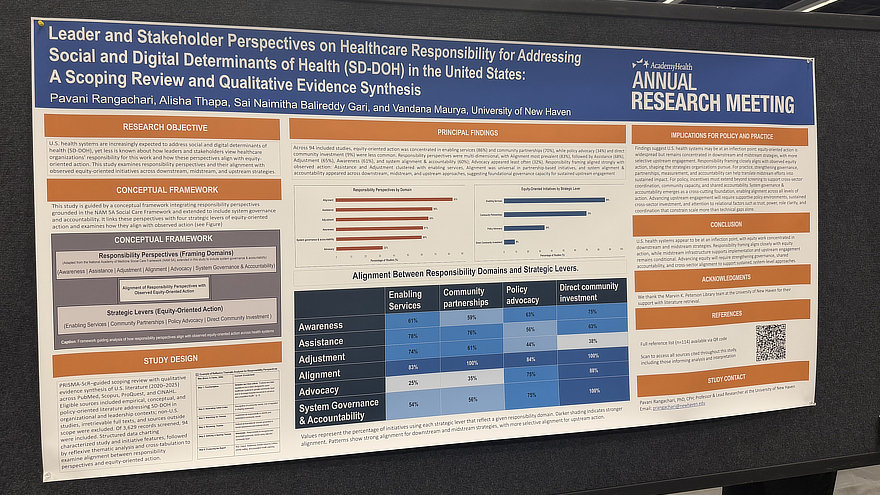
The study, conducted with Alisha Thapa ’24 MPH, Sai Naimitha Balireddy Gari ’26 MHA, and Vandana Maurya ’25 MHA, examined 94 sources to understand not simply what health systems are doing about social and digital determinants of health, but how leaders and organizational stakeholders understand healthcare’s responsibility for addressing them. We found substantial engagement in enabling services and community partnerships, but much less activity in upstream areas such as policy advocacy and direct-community investment. At the same time, the emergence of system governance and accountability across different forms of action suggests an important pathway toward more sustained equity-oriented health system transformation.

‘Connects evidence with community needs’
This research program began much more modestly in 2023 through a University Summer Research Grant and an extraordinary group of graduate students: Alisha Thapa ’24 MPH, Dawa Lhomu Sherpa ’23 MPH, Keerthi Katukuri ’24 MHA, Kashyap Ramadyani ’24 MHA, and Hiba Mohammed Jaidi ’24 MHA. Working with Lewis Goodrum of Yale New Haven Health, we asked a foundational question: What are hospitals and health systems actually doing to address social determinants of health?
Those students brought different professional experiences and perspectives to the work. Hiba described the project as helping her understand how hospitals engage with social determinants “at a broader level,” while Kashyap reflected on the potential for research to help health systems allocate resources more effectively.
The resulting 2024 Frontiers in Public Health publication was followed by our 2025 BMC Health Services Research study, with Alisha examining the impact of those initiatives. That work showed that progress in addressing immediate social needs was not yet translating consistently into broader systemic change.
Alisha has remained a significant part of this research journey well beyond her graduation in 2024, contributing to the work over several years and serving as a co-author on three of these publications.
Now a SNAP-Ed Nutrition Educator with Cornell Cooperative Extension of Clinton County, she continues to translate her public-health training into community-based practice. As she recently reflected, what began as an MPH research opportunity became “a body of work” through which she developed a deeper understanding of the roles healthcare systems and communities can play in advancing health equity. More importantly, she says the experience shaped the kind of public health researcher she hopes to become: one who “connects evidence with community needs.”
‘Addressing systemic barriers’
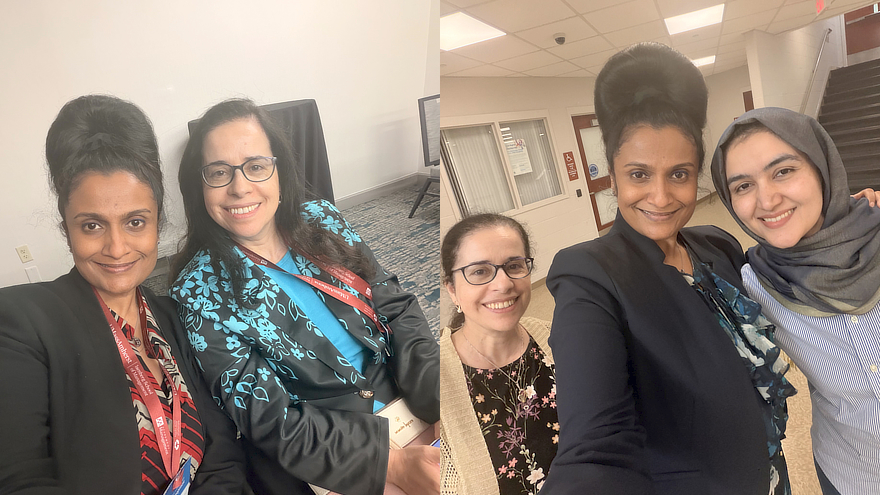
The questions continued to evolve. Our findings led us to consider digital determinants alongside social determinants and to ask what health systems would need to move from fragmented interventions toward equity-oriented Learning Health Systems. That work, with my faculty colleagues Khadija Al Arkoubi, Ph.D. (University of New Haven, Pompea College of Business) and Rajaa Shindi, Ph.D. (New Mexico State University), resulted in a 2025 International Journal for Equity in Health framework connecting data infrastructure, digital inclusion, organizational learning, community partnership, and upstream action.
Dr. Al Arkoubi captured an important principle behind this trajectory: academic research can contribute to real-world transformation when disciplines such as business, policy, public health, and health systems are brought together.
Our newest BMC Public Health publication extends that progression by asking a deeper question about responsibility. Naimitha recalls joining the project almost spontaneously during summer 2025 and being struck by the gap between how healthcare leaders talk about responsibility and where health-system action actually occurs. Vandana, who brought her perspective as both a physician and healthcare administrator, describes the broader goal beautifully: addressing systemic barriers without losing sight of the people those systems exist to serve.
‘Working directly with communities’

Perhaps the most meaningful evolution has been the movement from studying health systems in the literature toward working directly with communities.
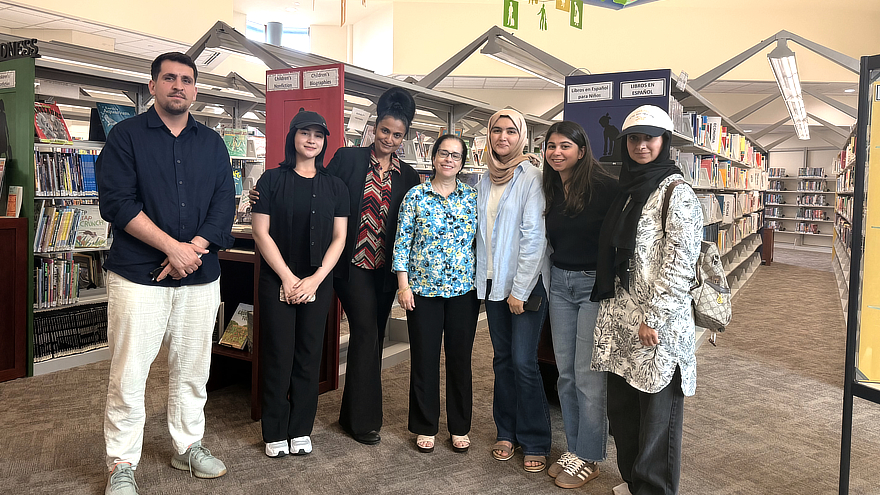
Last summer, our community-engaged work with Afghan women caregivers in Greater New Haven brought together faculty, students, community organizations, and healthcare partners. Twenty-one women participated in seven small-group conversations conducted in Pashto and Dari, helping us better understand healthcare navigation, access, digital processes, and the often-unseen work families and communities perform to make healthcare usable.
Dr. Al Arkoubi has been an invaluable faculty collaborator in this effort. Our student partners Helai Salimi ’26 BS, Basira Tallash ’28 BS, Rida Najib ’27 MS, and Naimi Ahmad Masoom ’27 MBA contributed language expertise, community engagement, and research support. Hossna Samadi and the Collective for Refugee and Immigrant Women (CRIW) provided critical leadership in participant engagement, cultural guidance, and trust-building. The New Haven Adult Education Center (NHAEC) and other community partners have also helped make this work possible. Shokreya Mashal ’28, an undergraduate Dental Hygiene student and president of the University’s Afghan Student Association, has also contributed to this journey by helping strengthen connections between our research team and the Afghan student and community network.
As Hossna expressed, the voices of immigrant women are “essential to understanding community needs and shaping meaningful solutions.” That principle increasingly anchors the entire research program.
‘Mentorship has become inseparable from the research program itself’
Other related projects are now extending the work from different directions. Iqra Malik ’27 MHA and Noor Abbasi, a recent University of Connecticut graduate now pursuing graduate studies at the University of Minnesota School of Public Health, are examining Race, Ethnicity, and Language Data Collection in U.S. Health Systems, including how sociotechnical practices affect data quality, representation, equity measurement, and downstream action.
Another team, including Alisha Thapa ’24 MPH, research assistant Noor Abbasi, and incoming student Leticia Offeibea ’29 MPH, is studying Aligning Community Need and Health System Response: A County-Level Analysis of Social Determinants Burden and Hospital Community Benefit Investment, extending our health-system research through a structured county-level lens. Currently based in Ghana, Leticia has contributed to this work for more than six months, even before formally beginning her MPH studies at the University of New Haven next year, demonstrating remarkable initiative and commitment to the research.
These collaborations matter to me as much as the publications themselves. Students have entered this research at different points—as graduate assistants, class-project researchers, volunteers, recent alumni, international scholars, and emerging collaborators, and several have remained engaged long after their initial involvement. Mentorship has become inseparable from the research program itself.
‘A homegrown and continually expanding research’
It has also been gratifying to see the reach and visibility of this scholarship grow. Our first three major publications have accumulated a substantial number of citations in a relatively short period, while the work has also attracted attention beyond traditional academic audiences, including coverage and discussion in professional outlets. The 2025 BMC Health Services Research paper alone has reached tens of thousands of readers and continues to be cited internationally.
Dissemination has itself been an important part of the collaborative journey, with students and faculty presenting this evolving body of work at national meetings, including the Academy of Management Annual Meetings in 2025 and 2026, AcademyHealth in 2026, and the American Public Health Association Annual Meetings in 2024, 2025, and 2026. This work has also been shared closer to home through the Connecticut Public Health Association Annual Meetings in 2024 and 2025, the CT NextGen showcases in 2025 and 2026, and University of New Haven Graduate Research Days in 2024 and 2026, creating opportunities for students and faculty collaborators to bring the research into conversation with audiences at the national, state, regional, and University levels.
Ultimately, citation counts, presentations, and publications are not the endpoint. The more meaningful measure is whether each study generates a better next question, brings another student into scholarship, creates a new partnership, or moves us closer to understanding how healthcare systems can become more responsive to the communities they serve.
What began with a University of New Haven summer research grant, five graduate students, a community health-system collaborator, and a question about what hospitals were doing to address social determinants of health has grown into something I could not have fully anticipated: a homegrown and continually expanding research community connecting evidence, students, faculty, health systems, and communities around a shared question: What would it take to make health equity part of how healthcare systems learn, operate, and transform?
Our newest BMC Public Health publication is an important milestone and one that I am immensely proud to celebrate with the students and colleagues who made it possible. But perhaps its greatest significance is what it represents: Not the culmination of a research agenda, but another step in a journey in which each study has opened the door to the next question and each collaboration has widened the community around the work. Most importantly the students have helped carry the research forward since the very beginning.
Contact
Get the highlights!
Stay up to date with our weekly e-newsletter, highlighting stories from around the University and media clips featuring our faculty experts.
Recent News
The Charger Blog
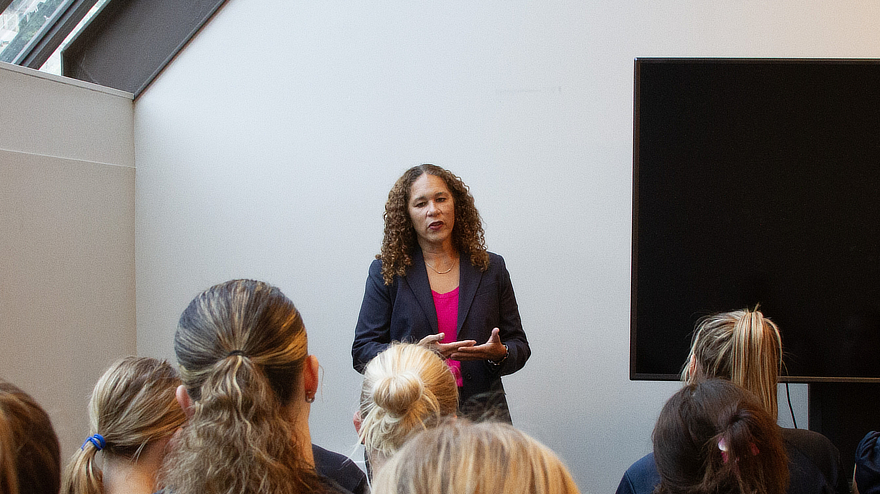
Connecticut Supreme Court Justice Inspires University of New Haven Volleyball Players Through Career Advice and Mentorship
The Charger Blog