
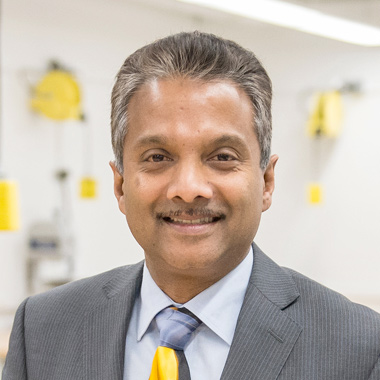
 Ronald S. Harichandran, Ph.D., P.E., F.ASCE
The Design Expo is an opportunity for our students to showcase the results from their senior design course. Student teams work to create a specific design solution for a "customer’s" real and unique need. Design and design education are, by their nature, experiential and collaborative, and our design team sponsors are our key collaborators. As a result of this collaboration, students bring energy and new ideas to meet the design need.
The design projects enable our students to put into practice what they have learned to prepare them for the workforce.
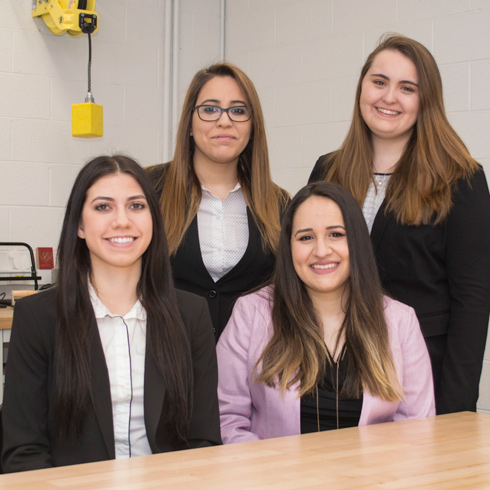
Laura Irwin, Isabel Melean, Julia Benitez, and Allison Morgan
Dr. Dequan Xiao
Integrative Materials Discovery Laboratory, University of New Haven
To design a chemical process to produce liquid biofuels based on the catalytic conversion of cellulose matter. Steps included: (1) bench-scale testing of a theoretically optimized tri-metallic catalyst to determine the kinetics and thermodynamics associated with the catalytic conversion of cellulose matter using methanol as solvent; (2) characterization of the biofuel products and the separation of various products; (3) design of a pilot-scale/large-scale plant; (4) economic analysis to estimate the capital investment, cost of manufacture, and profitability. This project aims to reduce the net emission of greenhouse gases to the environment by using renewable energy sources (biomass).
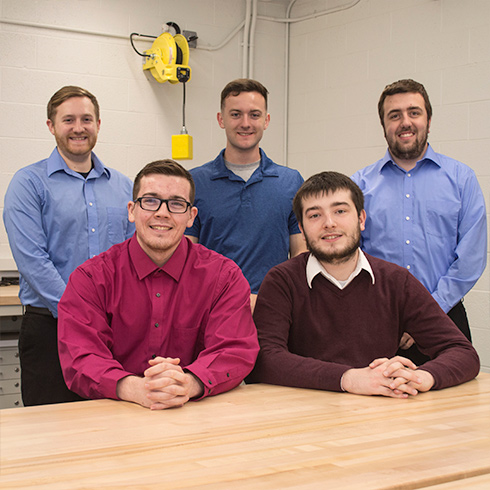
Hayden Andre, Chris Ellithorpe, Chris Farrell, Nick Hart, and Mike Parisi
Dr. Arthur Gow
Trent Molter, Founder, Sustainable Innovations
To design and build a water extraction system based on the electrochemical pumping of hydrogen through a Nafion membrane. The efficiency of the system to extract water from air (based on the relative humidity in air, electricity used, and water produced) as well as the cost of installing and operating the system were evaluated. The system is intended to produce safe drinking water for natural disaster relief efforts. It is also aimed to assist people in impoverished nations or nations where water resources are scarce.
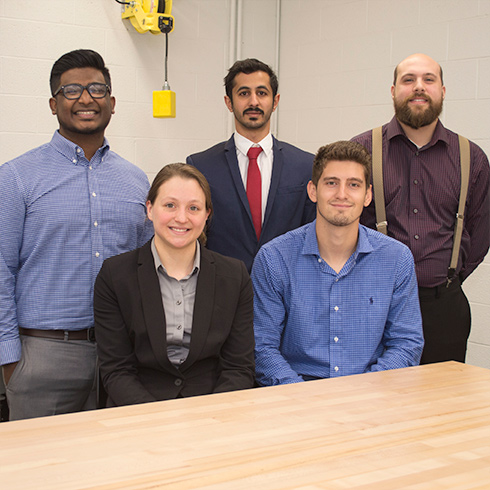
Emily Tassinari, Edwin David, Nick Rodo, Saud Alkhaldi, and Dylan Landry
Dr. Dequan Xiao and Dr. Eddie Luzik
To design a chemical process based on the catalytic conversion of natural gas to produce value-added methanol. Novel catalysts were tested, and the optimized experimental data obtained through experimental work were used to design the reactor and the separation unit for large-scale production. Economic analysis was carried out to determine the profitability of the designed process. This project is intended to reduce emissions from the utilization of the fossil fuels and create an alternative source of energy (methanol).
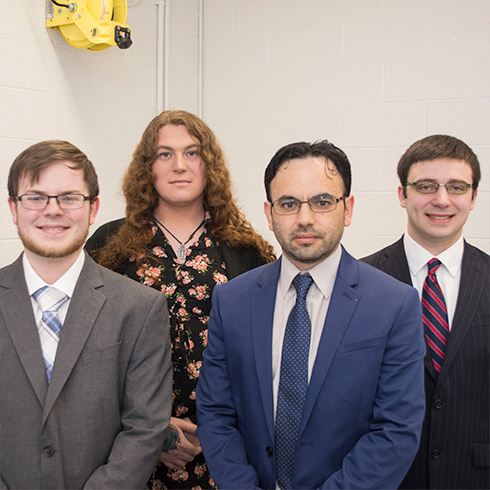
Owen Johnson, Fabian Vasquez, Josh Eighmie, and Sophia Weber
Dr. Pauline Schwartz and Dr. Carl Barratt
To design a process based on novel reactor design and operation to break chiral symmetry and produce 100% enantiopure compounds. Main focus was on the optimization of the thermal cycling reactor design and operation, and the transference of the knowledge obtained in small bench-scale testing (chemistry) to mass production (chemical engineering). The project aims to provide a way to industrially produce 100% enantiopure substances from racemic mixtures for pharmaceuticals and other applications. Bench-scale experimental work was carried out, and economic analysis was performed on the scaled-up process.
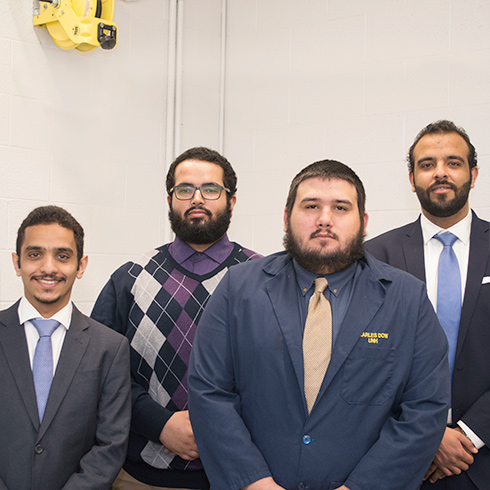
Charles Dow, Fahad Al-Ajmi, Abdullah Alsuwygh, and Hamad Alqoroni
Dr. Dequan Xiao
Integrative Materials Discovery Laboratory, University of New Haven
To design a filtration system based on titanium dioxide catalysts that can be used to remove the volatile organic compounds present in the exhausts of laboratory ducted fume hoods. Sulfur doped titanium dioxide and un-doped titanium dioxide catalysts were incorporated in a novel filter system. The efficiency of the catalytic filtration system (including a flow system, a filtration unit, and an FT-IR online monitoring unit) and the life span of the catalysts were evaluated to determine an optimized operation cycle. Commonly used VOCs in laboratories were used as the model compounds.
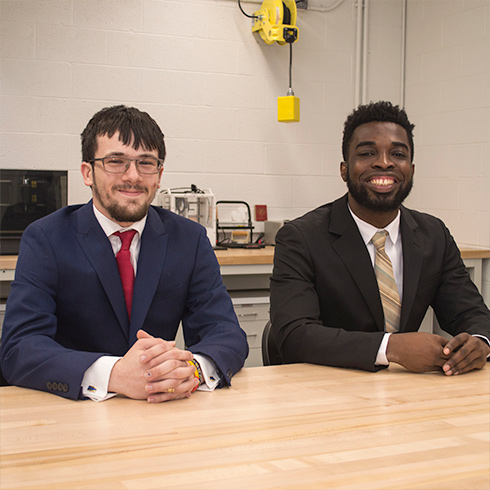
Staphin W. Codio and Paul Leggett
Marie Bartels, P.E.
Mark Paine, Assistant to the Public Works Commissioner, West Haven
To design a new Self-Regulated Tide Gate (SRTG) at the Cove River to replace the current inefficient, damaged hinge gate. The new SRTG was sized, a cost analysis was performed to choose the appropriate type to fit this location, and the location and orientation of the dike was considered in the design to prevent sand buildup in the SRTG that would inhibit flow and continue to harm the salt marsh. This project required a review of all past and current environmental impact studies, including past and current flow velocity, flow rate, river depth, tidal conditions, salinity surveys, and water quality surveys. Permits necessary to complete the project were also investigated.
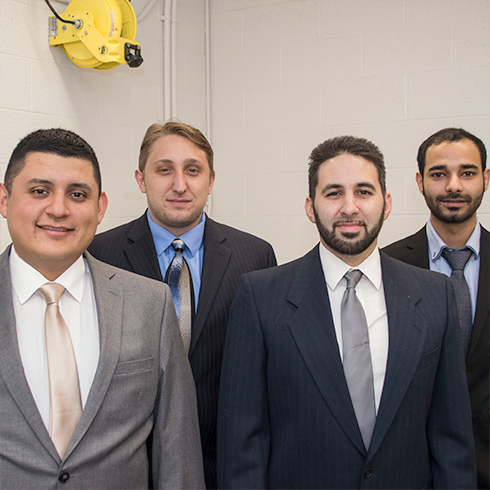
Nicholas Accurso, Esmaeel Alyosefi, Thomas Faye, and Fernando Palacios
Dr. Byungik Chang
Richard Holland, Architectural Engineer, Pustola & Associates LLC (who has a background in brewing)
To design a two-story sustainable microbrewery. The start-up microbrewery will include a building containing a 15 beer barrel (bbl) brewing system, a restaurant/bar, and site design including carports supporting solar panels. Foundation and structural designs following current building codes were completed for: 1) the building to withstand the structure and brewing equipment loads; and 2) the carports to support the structure and solar panels, and withstand wind loading. Sustainable practices incorporated to reduce utilities costs included the use of solar panels and the Long Island Sound to operate the elevator.
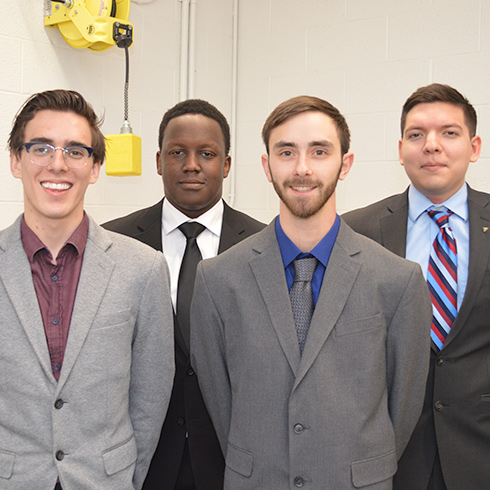
Jonathan Sorunke, Glen Craig, Matheo Moreira, and McKinley Straub
Marie Bartels, P.E. and Dr. Byungik Chang
Louis Annino, P.E., Assoc. VP for Facilities, University of New Haven
To design a multi-use sports complex on or near the University of New Haven's West Haven Campus. This complex aims to include an NCAA-approved swimming pool and rooms designed for both students and student-athletes. The complex will provide an alternative space for students who prefer less traditional exercise options, and will give the University’s athletics department an opportunity to expand the sports it currently offers. Structural and site designs were completed for the complex structure.
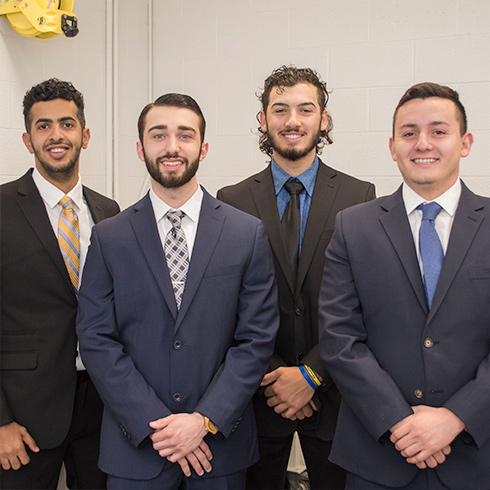
Richard Franklin, Tim Kennedy, Wael Sawwan, and Ed Rivera
Marie Bartels, P.E.
Joe Balskus, Director of Transportation Systems, VHB
To design an efficient, innovative, and safe roundabout to replace the signalized intersection of Water Street and State Street in the downtown area of New Haven. The project seeks to reduce the number of crashes as well as streamline the flow of traffic through this intersection by using a roundabout design. These goals were met by following all transportation codes as well as keeping New Haven specific transportation initiatives at its core.
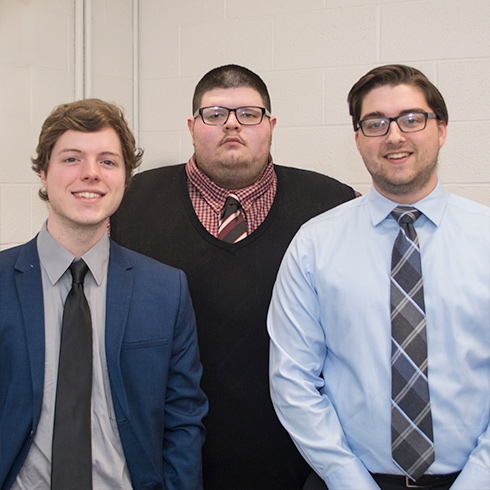
Rob Schmicker, Corbin White, and Tyler Balon
Dr. Frank Breitinger
Lucas Morris, Senior Manager of Cybersecurity
Crowe Horwath LLP, a public accounting, consulting, and technology firm that handles penetration testing and risk analysis for clientele
To design and build a command and control (C2) system to support penetration testing. The command and control server is a centralized server which can manage multiple satellite devices specified by the company and, therefore, will help the Crowe Technology Risk Consulting group to more easily manage clients’ networks during a penetration assessment. The system manages deployable devices (so-called NUCs), inbound connections, provides a command channel to the devices, and creates a (reverse) network connection to the system. Crowe staff performing a penetration test will be able to contact devices on various networks more efficiently using this system, regardless of the last usage time.
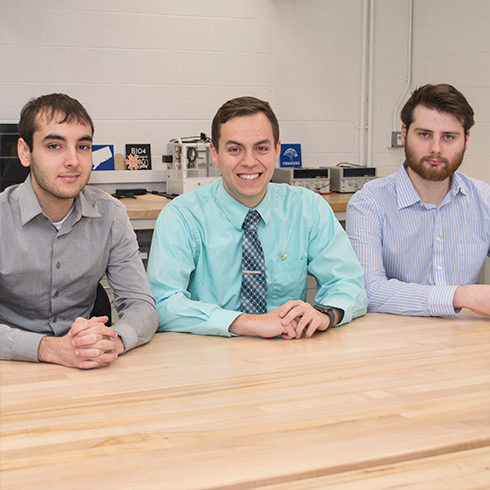
Stephen Hamilla, Nicholas Ghobrial, and Anthony Stabile
Dr. Frank Breitinger
Erik Blair, Director of Research and Development
DocuWare
To create an application that provides accessibility improvements to DocuWare users that may not be able to easily use the standard user interface due to limitations in mobility, manual dexterity, or vision. The application provides a new interface that has voice control and text to speech technology to provide easier access to the content of documents stored in the system. Users are able to give voice commands to prompt the application to read and manage their documents similarly to the standard DocuWare interface.
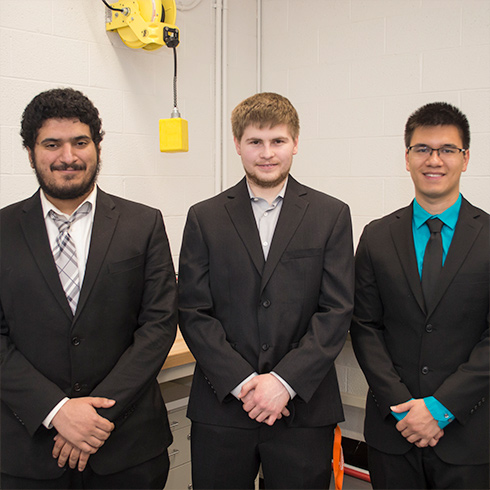
Faisal Khalid S Alhisan, Brandon Ignacio, and Kyle Jordan
Dr. Frank Breitinger
To influence daily student life by showing students the current food options in the dining area. The webpage will allow students to view the menu, set preferences, and get notifications about today's dishes. Thus, students and staff know up front if they like the options and do not waste dining dollars/meal swipes. Additionally, this quickens the process of searching and, therefore, lines will be shorter.
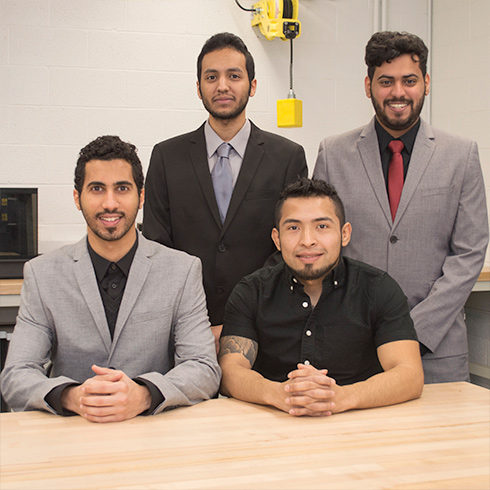
Christian Zabala, Yaseen Hadda, Saeed Alzahrani, and Bin Suaydan Abdullah
Dr. Amir Esmailpour
To design an enterprise network for the West Haven Police Department that keeps their department connected to other police departments across the United States, as well as public networks. The project covers physical and logical design for both LAN and WAN sides of the enterprise network. On the LAN side, it includes setup and configuration of several servers such as File, Web, Mail, DHCP, DNS, etc. On the WAN side, it covers several important concepts such as routing, switching, security, etc. The design covers both the campus and WAN network for the enterprise including connectivity, DMZ zones, data center, wireless networks, etc
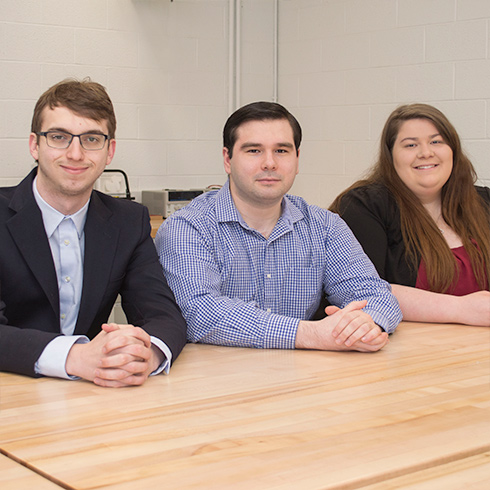
Michael Mazzola, Courtney Hassenfeldt, and Jonathan Slosser
Dr. Amir Esmailpour
To design and implement an Enterprise network for a hospital campus that meets the needs of 5,000 employees and staff, 10,000 patients, and 200 doctors. The network covers the main hospital campus housing 10 buildings and multiple remote sites. It allows high volumes of traffic and access to patients’ records and schedules. It supports several typical applications, such as mail and web servers, as well as other medical and health related applications used by doctors and employees, such as online patient medical records. There will be a main server room in the headquarters, including a private cloud and data center, as well as small local server rooms on each site. The network is fully compliant with the HIPAA standards. The design includes the entire end-to-end network, covering LAN, WAN, wireless, and cloud sections.
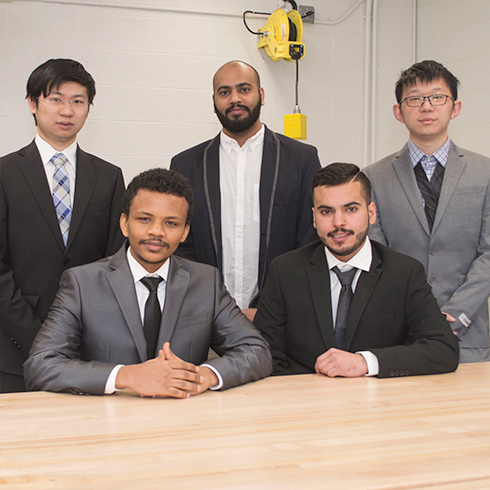
ZhiPeng Yang, Yao Li, Abdullah Koneir, Daniel Girum, and Abdulaziz Saad Alshunife (System Engineering)
Dr. Bijan Karimi
Tagliatela College of Engineering, University of New Haven
To design a robot that can transmit visual data, for example using a controllable camera, to a remote device, while allowing the user to remotely control the robot’s movements. The robot should be equipped with an arm that can do a simple task such as lifting an object and delivering it to the operator. The project uses a suitable communication method so that the operator can observe the robot’s surroundings in real time. The transmission process has a high data throughput rate so that images of suitable quality can be observed. This type of robot can be very useful for observing surroundings that are dangerous for human beings.
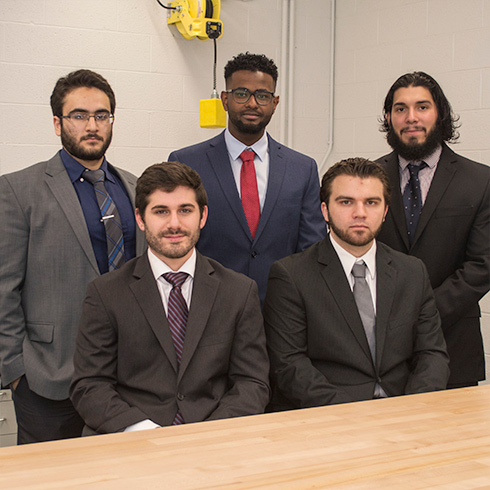
Mahmud Ahmad, Steven Corrales, Domenic Gubernat, Raymond Kollias, and Osama Ali Albarnawi (System Engineering)
Dr. Bijan Karimi and Dr. Mohsen Sarraf
To design an array of smart headphones that monitors ambient noise and waits for a certain threshold and amplitude frequency before alerting the users in the network about potential danger. The project aims to provide an added layer of safety for people working at hazardous sites, by creating a central server that allows all of the headphones to communicate with each other. If one headphone is set to alert, all of the headphones are set to alert. The system has a manual ‘alert mode’ and alarm that can be triggered by the user by pressing a button; the alert will propagate to all other users.
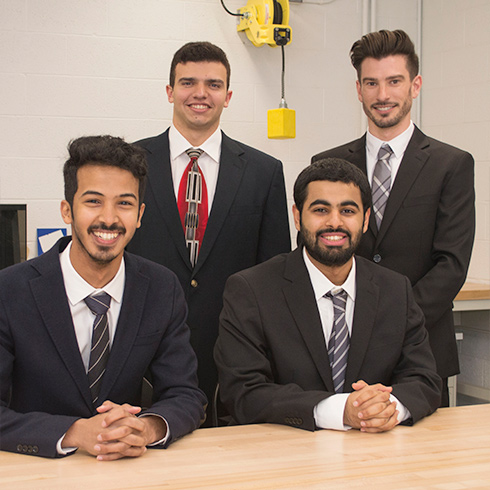
Mark Gelinas, Anthony D’Amico, Mishal Alotaibi, and Mohammed Albinali
Dr. Mohsen Sarraf
To develop a system that will send and receive voice calls and data transmissions in order to "score" the quality of service of different providers. The data collected includes GPS location, time of day, and weather conditions, along with the quality of service. The "scoring" is found using the Perceptual Evaluation of Speech Quality (PESQ) algorithm to provide a mean opinion score. This scored data can then be sent to the service providers, informing them of their quality of service within the University of New Haven.
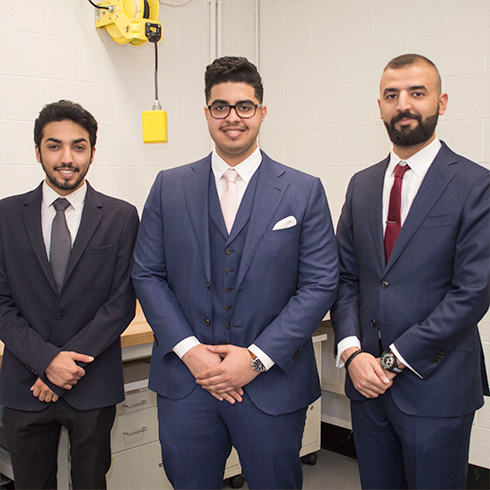
Abdulkareem Alqahtani, Thueni Hamad Al Khaldi (System Engineering) and Khalid Almanae (Computer Engineering)
Dr. Bijan Karimi
Tagliatela College of Engineering, University of New Haven
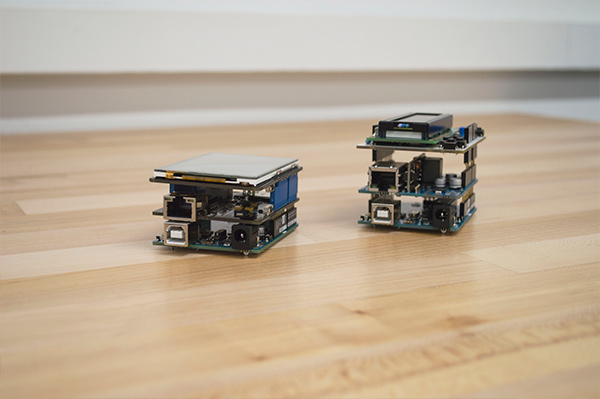
To design, build, and develop a network tester that will make IT staff work significantly easier and more efficient. The device will test the IP, ping, gateway, DNS, DHCL address, and any custom IP. The device contains reliable code and is packaged in a small and easy to carry enclosure.
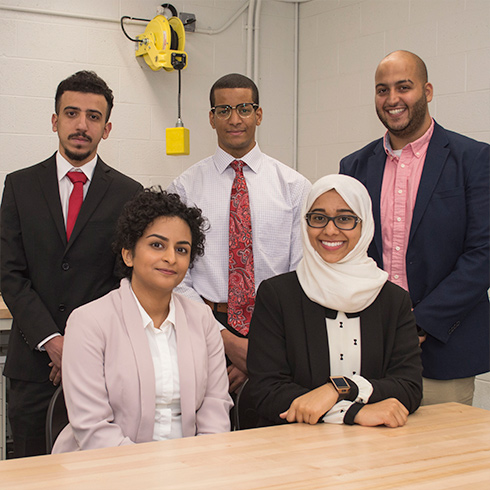
Mryum Aljanobi (Computer Engineering/Computer Science), Franzel Pena (Computer Engineering), Reem Basurrah (Mechanical Engineering), Bassam Batyoor (Electrical Engineering), and Mohammed Bahamed (System Engineering)
Dr. Bijan Karimi and Dr. Frank Breitinger
Mr. Terrance Gilbert
To design and create a universal smart locking system that will secure a large variety of items ranging from firearms to bicycles. The locking system communicates wirelessly at all times via cellular communication and provides real-time GPS and sensor feedback to the user. A mobile application gives users the capability to track, control, and receive data about the locking system in real time.
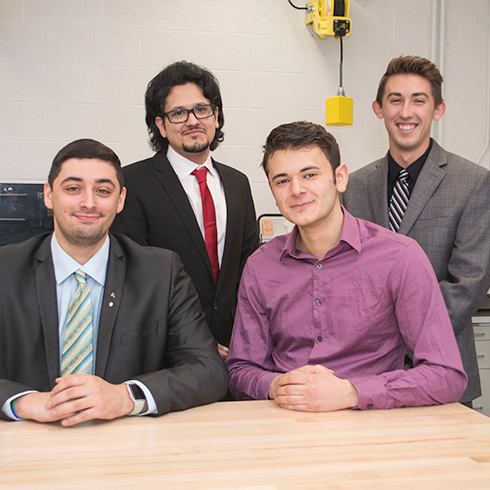
Justin Pelletier (Electrical Engineering), Jonathan Ramirez (Computer/Electrical Engineering), Chris Ravettine (Mechanical Engineering), and Mohammed Bin Shareif (System Engineering)
Dr. Mohsen Sarraf
Joseph Turner, Co-Founder, Business Development and Marketing
Exocetus Autonomous Systems, owner of the Coastal Glider, which is a superior platform providing large modular sensor packages combined with long duration missions
To design, manufacture, and test a "balancing tool" (or "ballasting system") for the Marine Exploration Vehicle created by Exocetus Autonomous Systems. This system is accurate, transportable, and easy to use. It encompasses a process to pre-calculate the balance point and a methodology indicating where to securely add weights to effectively calibrate (or "ballast") the Marine Exploration Vehicle.
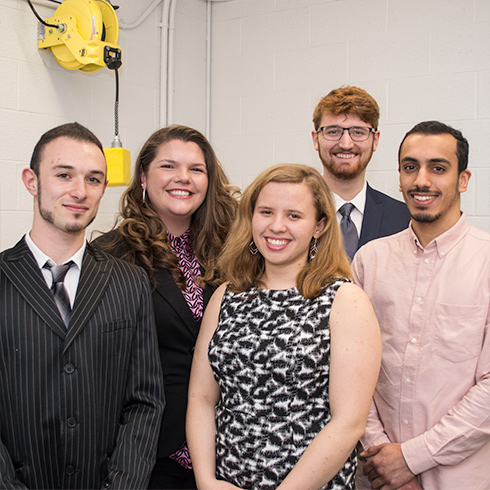
Melissa Mickolyzck, Sophia Oselador, and Victor Miller (Electrical Engineering); Peter Ball (Mechanical Engineering); and Abdullah Almannai (System Engineering)
Dr. Bijan Karimi and Dr. Mohsen Sarraf
John Poleto, Senior Project Engineer
The Lee Company, which designs and builds state-of-the-art products that exceed customers' expectations for utility, performance, and quality
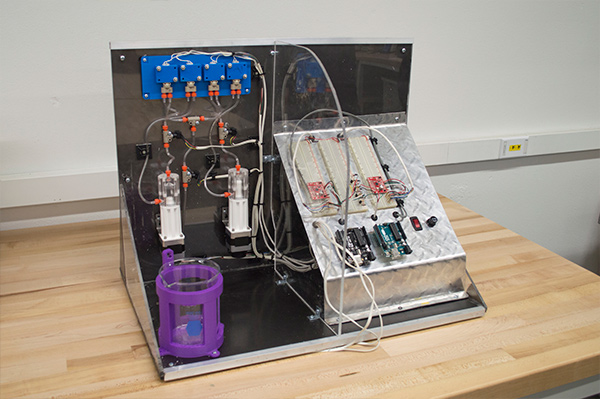
To design and build a dual-pump fluid control system that allows for a flow output that is sufficiently close to continuous flow. The ideal continuous flow would have no dips or spikes in the volumetric flow rate while the pump is active. Mechanical and electrical schematics were designed, individual components as well as the overall system were tested, and different flow rates and adjustments were applied to determine optimal results.
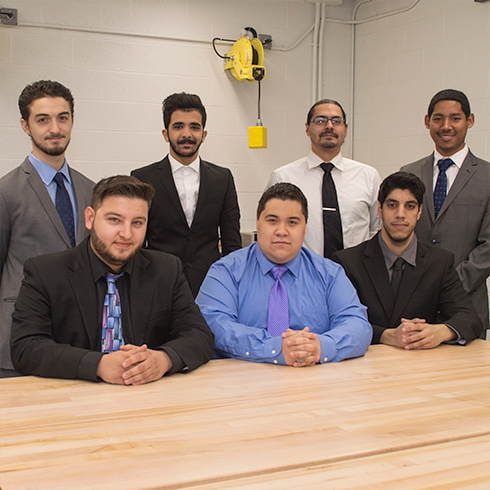
Juan A. DePara, Patrick Henderson, and Brandon Vaughn (Computer Engineering); David Berube (Electrical Engineering); Austin Florio, and Evan Deluty (Mechanical Engineering); and Ryan Alhamrani (System Engineering)
Dr. Bijan Karimi
John Falconi, Board of Governors Member, University of New Haven
To design and create a fire-fighting robot that contains all the features and code necessary for it to be capable of entering the Trinity International Robot Competition.
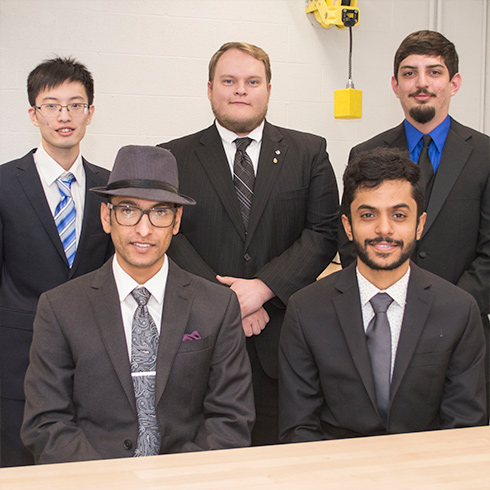
Julian Restrepo, Brian Phillips, Xiangyu Li, and Saad Alqasem (Electrical Engineering); and Rashed Alkhaldi (System Engineering)
Dr. Mohsen Sarraf
Tagliatela College of Engineering, University of New Haven
To create a device that reduces the risk of injury related to the use of forklifts in an industrial setting. The proximity tag alerts the user if he/she gets too close to a predetermined object, person, or point in space. The project includes a user interface to control proximity settings as well as settings for the alert system. The proximity tag is small enough to be easily worn by a person or mounted on an object.
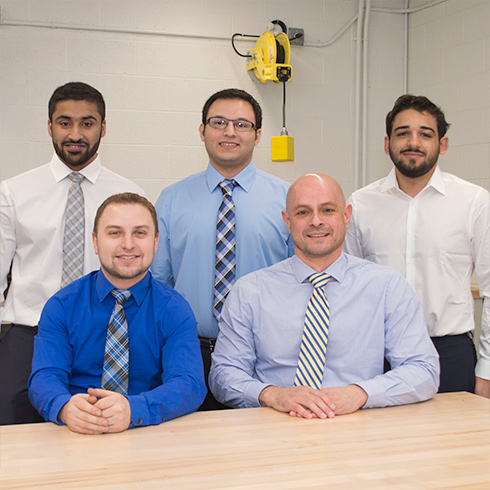
Steven Zuniga, Thomas Socha, and Luis Rodriguez Duenas (Electrical Engineering); Mohammed Alkhaldi (Mechanical Engineering), and Maher Shawli (System Engineering)
Dr. Bijan Karimi
Tagliatela College of Engineering, University of New Haven
To design and build a safety device that is reliable and accurate to aid people in the event of an accident and alert important individuals. The device automates the detection of an accident and alerting process to account for people’s inability to communicate the accident. The device will also allow people to manually trigger the device. This device will aid people working alone or in a group setting.
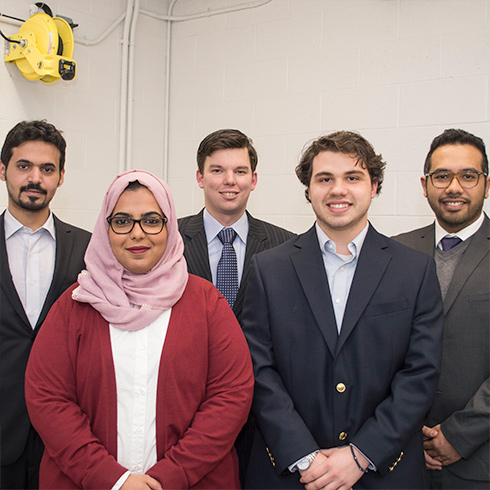
Ahmed Elzikri (System Engineering); Bryan Sobchuk, and Mohammad Mandora (Electrical Engineering); Safa Alharbi (Computer Engineering); and Skyler Iafrate (Mechanical Engineering)
Dr. Bijan Karimi
Tagliatela College of Engineering, University of New Haven
To design and build a device to decrease the number of accidents at hazardous workplaces. The device is designed to be carried by workers and is associated with a unique ID. It specifies the approximate location of an injured worker by using GPS. If the worker is incapacitated and in positions such as upside down, horizontal, or motionless, he or she can send an emergency message seeking assistance. The device has a light that flashes during an emergency to make locating the victim easier.
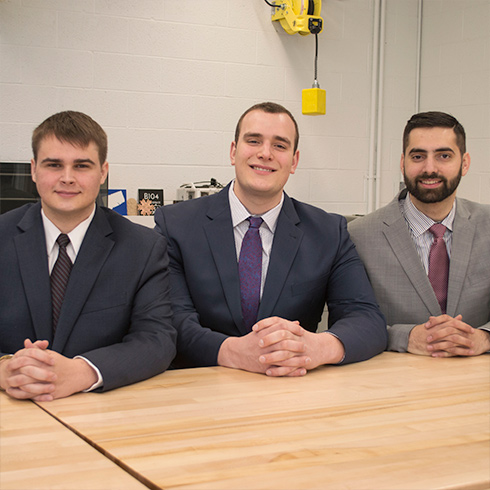
Pasquale Colapietro, John Golzio, and James M. Montesano
Dr. Ismail Orabi
Leighton Lee (Facility Manager), Forrest Clifton (Manufacturing Engineer), Michael Tripp (Manufacturing Engineer), and Kevin Savona (Manufacturing Engineer)
The Lee Company, designer and builder of state-of-the-art miniature fluid control products that exceed customer expectations for utility, performance, and quality
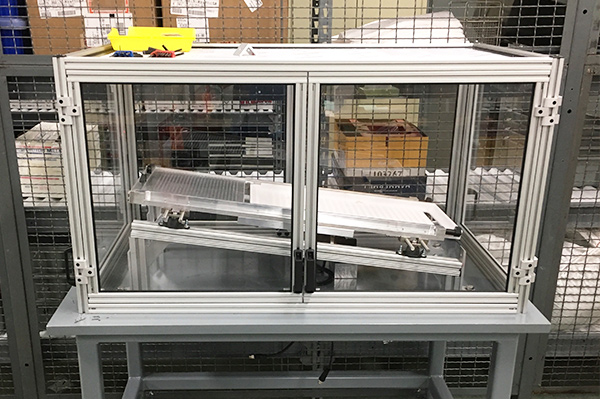
To design and implement a machine that can help separate two of the company’s most popular check valve parts from a tumbling media. The machine separates the parts from the media within a specified time without occupying too much space, or damaging or contaminating the parts. The product helps The Lee Company expedite its manufacturing process significantly, leading to lower manufacturing cost and higher product output. The machine will be placed in the company’s finishing room and become a permanent part of its manufacturing process.
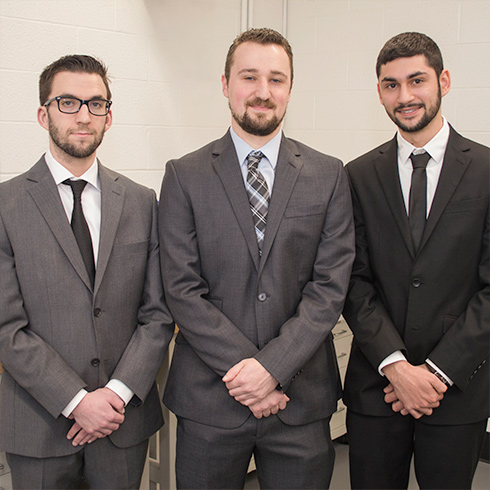
Joseph Cherwinski, Noah Violette, and Antonio Di Vita
Dr. Ismail Orabi
Jarek Hyjek, Senior Automation Engineer; Jim Mitsch, Continuous Improvement/Facilities Manager; Andrew Hearn, Automation Engineer; Jim Prota, Manufacturing Engineer; and Jesse Stirna, Manufacturing Engineer
RBC Heim, provider of global industrial, aerospace, and defense customers with unique design solutions to complex problems and an unparalleled level of service, quality, and support
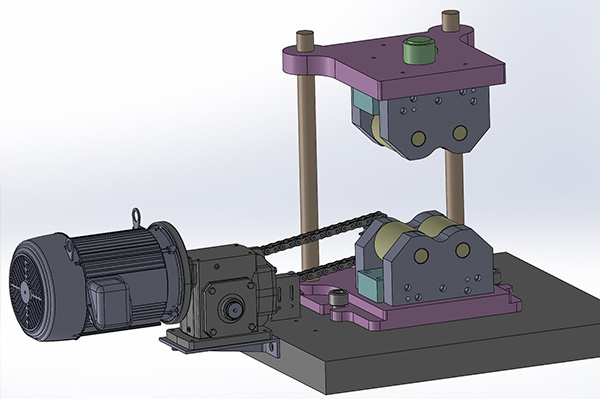
To design a process and identify equipment to be used for automatic spherical bearing torque loosening. The torque loosening process was analyzed to find a relationship between pressure and torque. This relationship was used to develop and prototype a process that would be used for the torque loosening process.
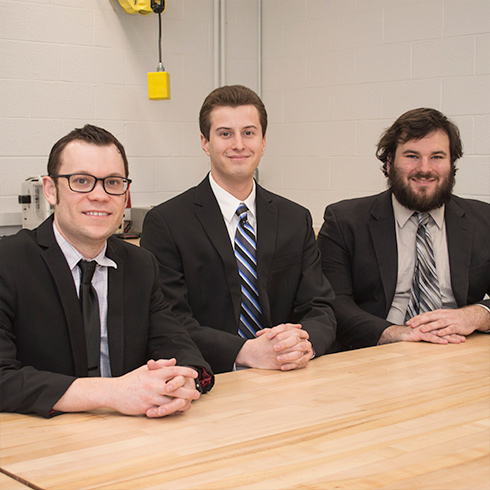
Cameron Brouillard, Kevin Holowaty, and Kevin Calvert
Dr. Ismail Orabi
Peter Wickenheisser, Sr. Project Engineer
Laticrete International, Inc., a worldwide manufacturer of green flooring and facade materials for residential, commercial, and industrial applications
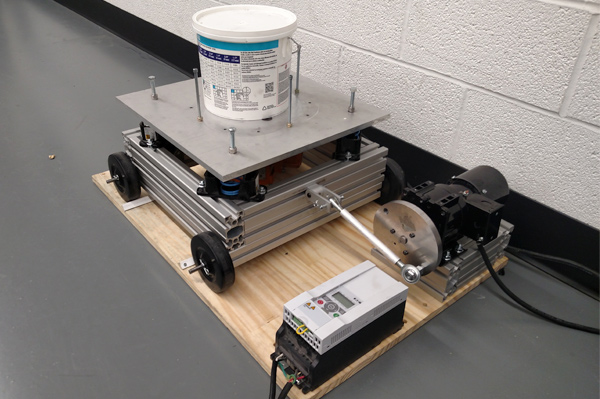
To research, design, and build a device that can recreate the vibrations felt inside a freight truck as accurately as possible. The device accurately reproduces the vibrations within a truck so that the company’s Research & Development Department can use it to test products that may be prone to settling. The device provides a testing platform that the company currently does not have.
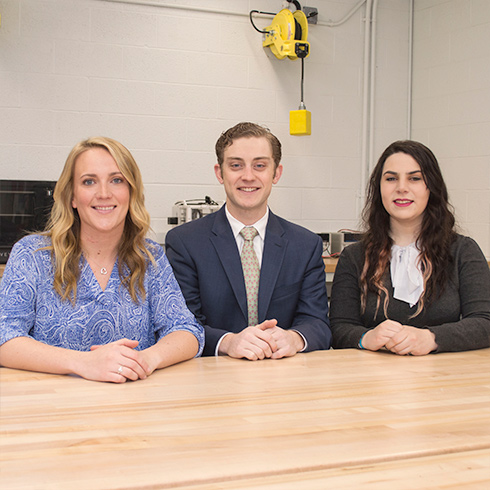
Ashley Chase, Mackenzie Corliss, and Amanda Rimkunas
Dr. Ismail Orabi
Mikel Brigley, Dynamics Group
Sikorsky Aircraft Corporation, designer and builder of the world’s most advanced helicopters for commercial, industrial, and military uses
To design and fabricate a flax fiber composite using a dry natural fiber material and bio-resin that can operate under rotorcraft vibratory conditions. Experimental material testing was performed to obtain the physical properties of composite structures with different fiber orientation and layers. From this data, a final beam was designed, fabricated, and analyzed under both static and dynamic loading in order to assess the feasibility of utilizing natural fiber composites under aircraft operating conditions and Sikorsky specifications.
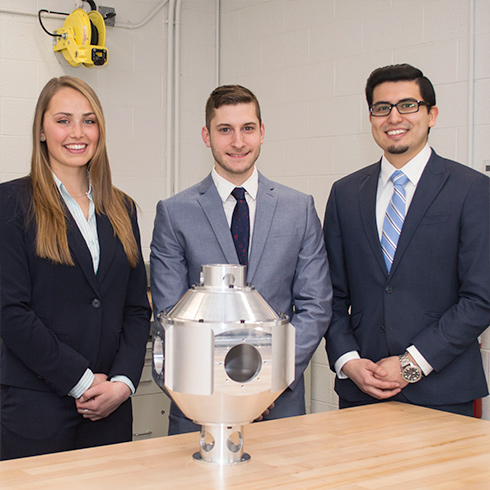
Jesus Amado, Albert Blank, and Shannon Centrella
Dr. Ismail Orabi
Bill Welch, Senior Technical Fellow
Sikorsky Aircraft Corporation, designer and builder of the world’s most advanced helicopters for commercial, industrial, and military uses
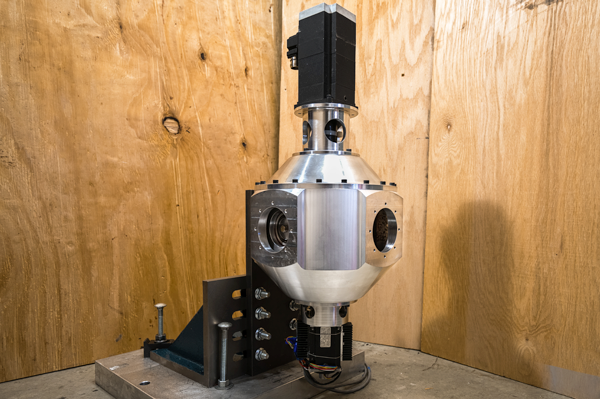
To design and improve a vibratory control moment gyroscope for the purpose of suppressing vibration caused by the dual rotor blades of Sikorsky’s S-97 Helicopter. This was achieved by stiffening the outer containment frame, strengthening the flywheels to prevent failure, and optimizing the motors to give maximum efficiency. The product will be installed in between the rotor blades of the aircraft to mitigate rotor head vibrations caused by aerodynamic loading at the blade tips.
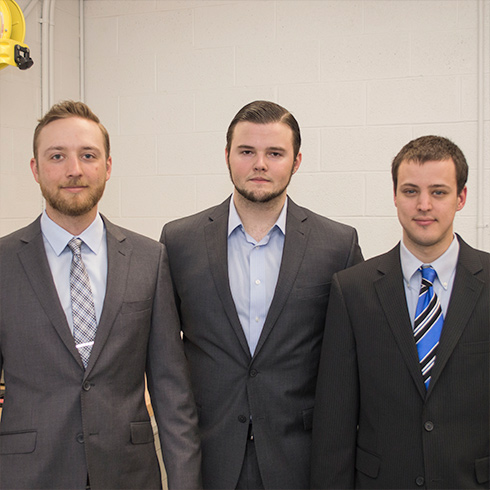
John Bray, Kyle Camerer, and Mike Samulenas
Dr. Ismail Orabi
Carl Perry, VP of Engineering and Design
APS Technology, creator of the world’s most innovative and reliable off-the-shelf and custom electromechanical, instrumentation, sensor, and software designs for downhole and surface applications
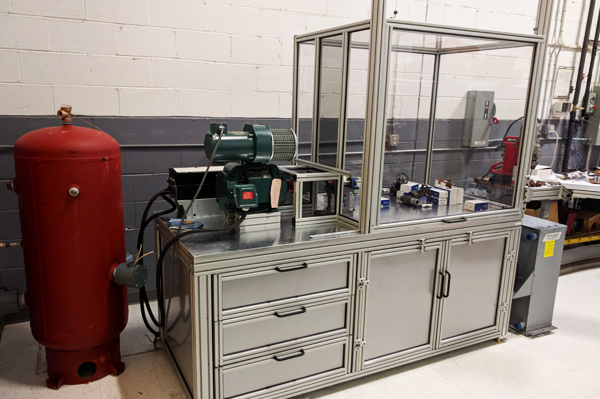
To design and implement a test facility for the new line of hydraulic pumps that APS Technology will be using in its oil drills. The test facility will replicate the extreme downhole conditions in order to validate the new design. By running the pumps under extreme conditions, they will be validated, calibrated, and broken in. Some of these conditions include temperatures up to 200C, pressures up to 1500 psi, and speeds up to 7000 RPM.
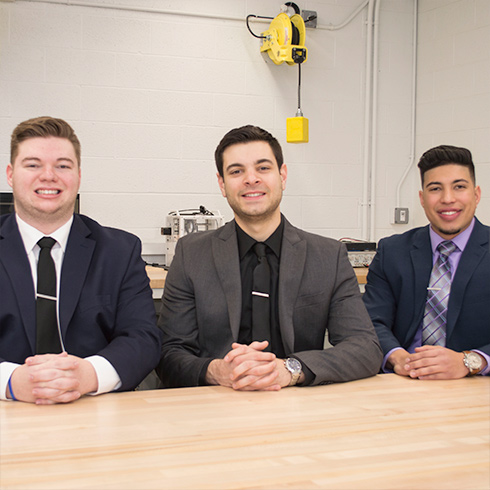
Andres Gomez, James Lancelot, and Jason Baker
Dr. Ismail Orabi
Miguel Torres, Systems Engineer; Elspeth Ochs, Design Engineer; Gregory Quinn, Research Engineer; and Steven Madamba, Design Engineer
United Technologies Aerospace System, provider of innovative aerospace technologies and integrated systems that advance the performance, safety, and efficiency of commercial aviation, global defense, and space exploration
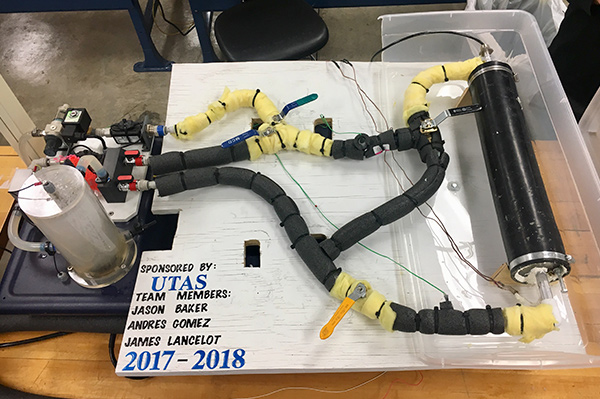
To create an enclosure that will allow a phase change material to expand without a resulting increase in pressure. Phase change devices are often used in heat exchangers because of their ability to absorb peak heat loads. Larger applications of these devices include heat exchangers in spacecraft and thermal energy storage systems for solar power plants. An enclosure design was developed with an elastic membrane to allow for expansion and avoid pressure spikes. This heat exchanger will help reduce the weight and size of electronic cooling systems onboard spacecraft.
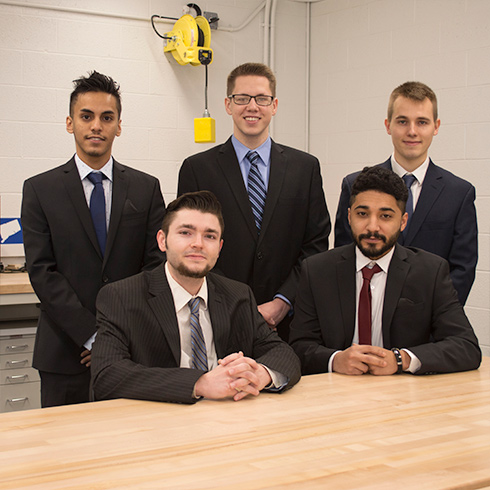
Chad Peterson, Randy Warren, and Eric Vandlik (Mechanical Engineering); Arkan Alquthami and Abdullah Alshayeb (System Engineering)
Dr. Joseph Levert, P.E. and Dr. Chong Qiu
Department of Chemistry and Chemical Engineering, University of New Haven
To measure very small particles in the air by quantifying their number and size. The apparatus detects particles much smaller than those measured for current air quality standards, and analyzes particles with diameters between 50 nm and 200 nm. Existing instrumentation hardware, software, and electronics on the apparatus were integrated to enable operation for research purposes. The research enabled by this apparatus can help improve the understanding of aerosols and their potential impact on human health.
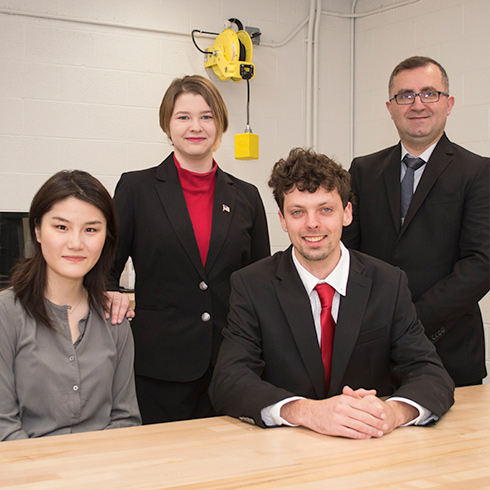
Kelly Craven, Jesse Philippi, and Atilla Irmak (Mechanical Engineering); Luyang Yu (System Engineering)
Dr. Joseph Levert, P.E
Luke Sisson, Regulatory Engineer II
Honeywell Safety Products, a global manufacturer of leading personal protective equipment
To develop a design and process that validates the use of an infrared camera in place of thermocouples to verify that the temperature of individual components of Honeywell’s fire alarm circuits are within safe limits. In the current process, thermocouples must be manually attached to each component of the circuit, which can take up to six weeks. The new process will save costs by shortening the time span of testing. The variation of IR readings relative to thermocouple readings was characterized, and products and processes to ensure that an IR camera can be used to provide accurate readings of Honeywell’s circuit components were developed. The new approach will also enable more rapid product development.
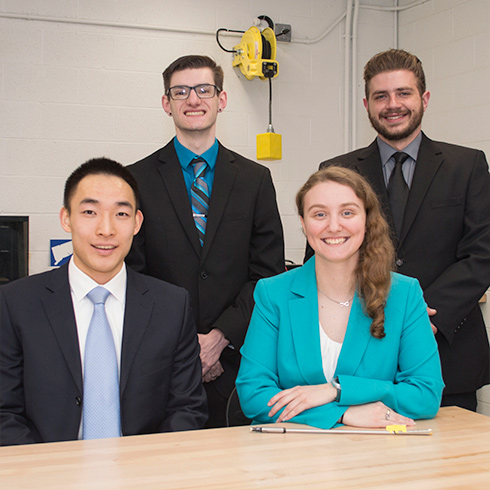
Benjamin J. Gottlieb, Kälyn C. Newmin, and Sean Scianna (Mechanical Engineering); and Runsang Liu (System Engineering)
Dr. Joseph Levert, P.E.
Daniel Butkievich, Manager|AME – New Product Development; Erik Wengenroth, Product Engineer|NPD Operations; and Ilir Bejleri, Senior Product Engineer|New Product Development
Medtronic, Covidien Division, developer of medical innovations to provide impactful surgical solutions and advance patients’ monitoring and recovery
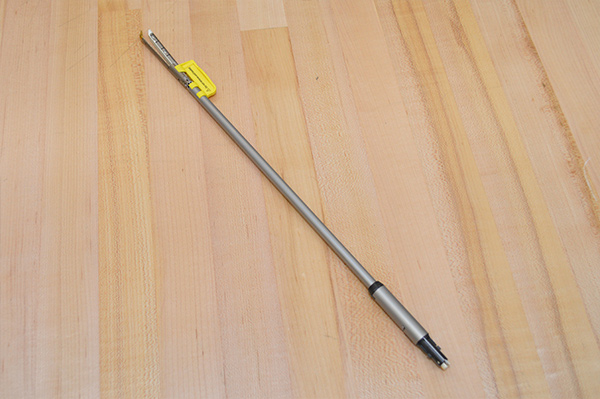
To develop a process to salvage reusable parts from single use surgical stapler assemblies that have been tested for routine quality assurance. The reusable parts were identified through an economic analysis. The process, that includes the design of ergonomic tooling, will efficiently disassemble and recover reusable parts. The safe re-use of the salvaged parts was also assessed through analysis and/or testing to meet FDA requirements.
We thank our industry sponsors who served as customers for our students as well as supporting their prototyping expenses. As customers, they gave valuable time and insights that uniquely benefited our students with an experiential design education in a real-world setting, which greatly complements the team mentoring by our faculty colleagues. Their generous commitment to our students brought their design education to life.