
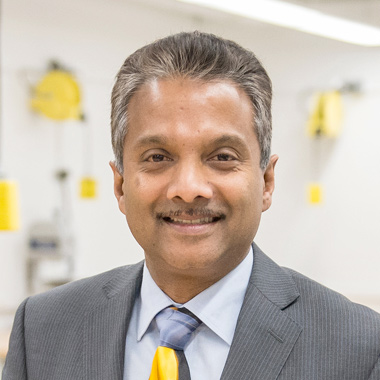
 Ronald S. Harichandran, Ph.D., P.E., F.ASCE
The Capstone Design Expo is an opportunity for our students to showcase the results from their capstone design course. Student teams work to create a specific design solution for a "customer’s" real and unique need. Design and design education are, by their nature, experiential and collaborative, and our design team sponsors are our key collaborators. As a result of this collaboration, students bring energy and new ideas to meet the design need.
The design projects enable our students to put into practice what they have learned to prepare them for the workforce.
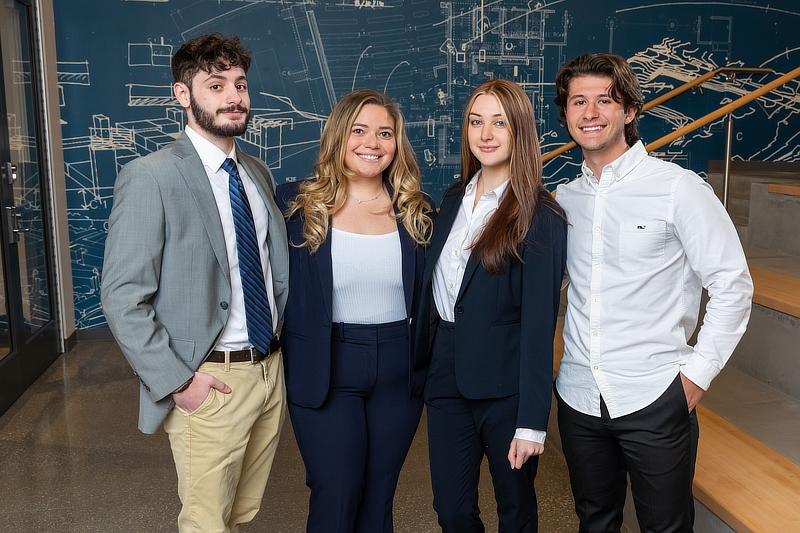
Zachary Adkins, Michael Del Grosso, Antonia Grohs, and Madison Liguori
Dr. Nagasree Garapati
Kyle Schmidt, Research and Technology Engineer, Process Engineering Center, Albemarle Corporation
Albemarle: Global Specialty Chemicals Company; making the world safe and sustainable by powering the potential of people
To develop a detailed analysis for both the production of the raw materials and BPA. This process would be developed at the chemical facility. The developed unit has integrated recycling and wastewater treatment to ensure that the water contains a maximum of 10 parts per million (ppm) phenol and 1 ppm BPA to satisfy environmental regulations. The lifecycle assessment of the process will be performed to understand the overall sustainability of the chemical process unit.
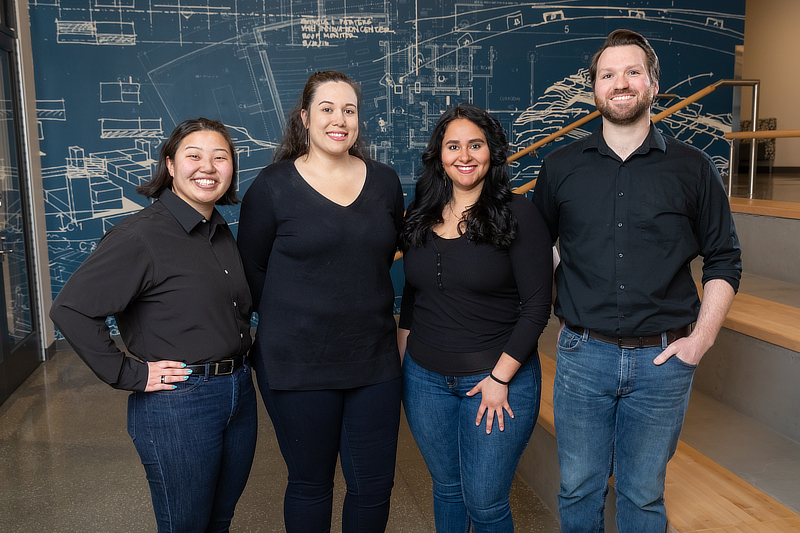
Martha Jacobs, Alexandra Kased, and Jake Woolmer (Chemical Engineering); and Aliza Johns (Mechanical Engineering)
Dr. Nagasree Garapati
Dr. Kristine Horvat
To design and upgrade a continuously stirred tank reactor (CSTR) system to study the kinetics of the saponification process. The project seeks to determine the optimal equipment to build a functional CSTR system, along with a control system. The process control system should be able to control the temperature and flow rate of reactants.
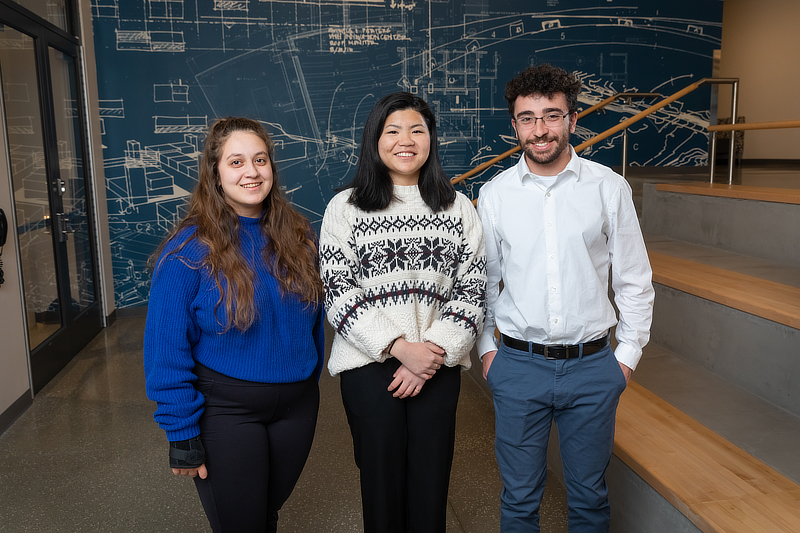
Chris Bruno, Alison Colaco, Morgan Meier
Dr. Nagasree Garapati
To design a facility for direct air capture of CO2 and convert it to produce valuable products. CO2 direct air capture will be done using a packed absorption column. Different possible valuable products are analyzed to identify the final product, and the Sabatier reaction to convert CO2 to methane using renewable energy sources is considered. The project seeks to provide a full assessment of this facility including process and utility flow diagrams accompanied with a ChemCAD model, equipment and specifications list, cost assessments and safety analysis.
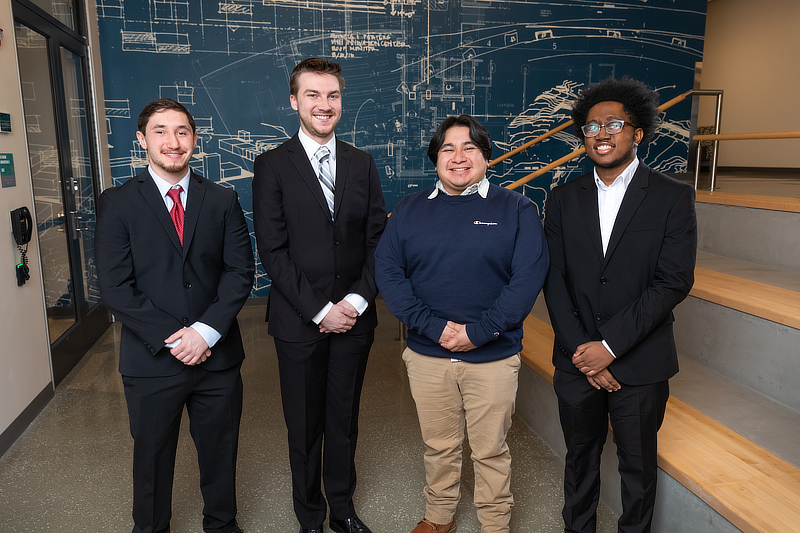
Jose Ramirez, Nicholas Blau, Patrick Gogol, and Cire Harrison
Cassandra Champagne
Alex Mora, Foth Engineering
Foth Engineering, a multidisciplinary company that provides work for both federal and state usage works with private and municipal clients.
To replace the dead man anchor system for a steel sheet pile bulkhead that was subject to progressive failure on a client site in Memphis, Tennessee. The team will replace the existing dead man anchor system with a pressure-grouted ground anchor system and this system includes anchors that will be inserted on the passive active side of the wall.
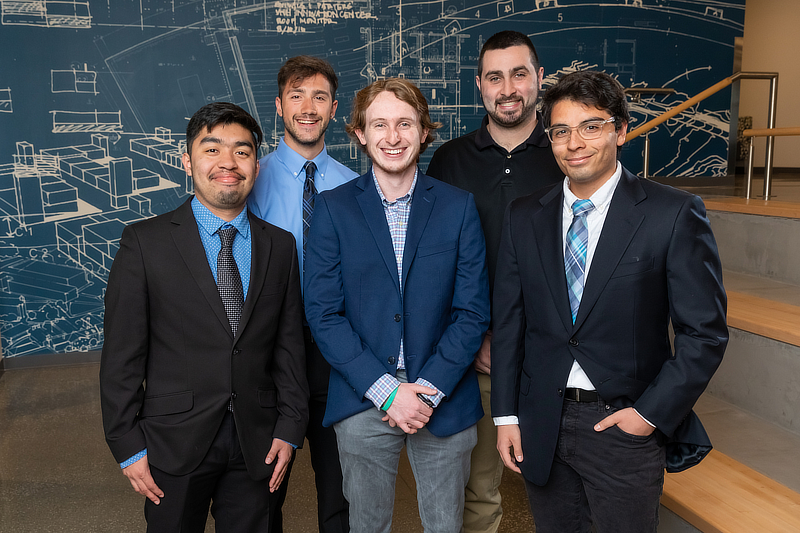
Lucas LaBar, Sean McKee, Lucas Nunez, Tim Renkowsky, and Kendall Underberg
Matthew Niski
Cody Savoy (RWA), Lawrence Marcik (RWA), Orville Kelly, Christopher Haker (Tighe & Bond), James Davis (GZA)
The Regional Water Authority (RWA)
To design a dewatering system to assist in the rehabilitation of Lake Whitney Dam. The designed system will transfer water from the lake to Mill River located adjacent to the lake. This system will be easily removable as well as last 2-3 years considering extreme weather conditions. The team will analyze volumes, flows, and outside factors to establish the dewatering system and its materials. The preliminary design will include layout, materials, connection types, scour protection, inlet, etc.
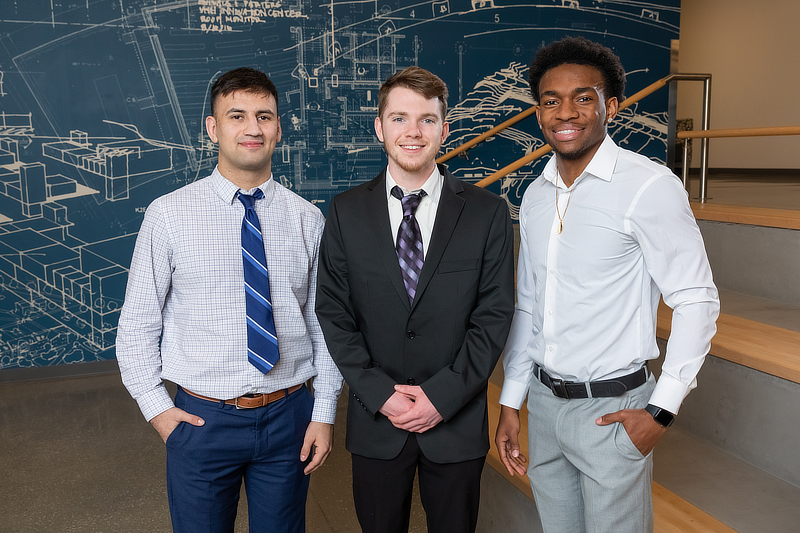
Marco Lapointe, Giuseppe Marmo, Nick Mayers, and Luke Montanaro
Dr. Goli Nossoni
Michael Oliver, Evan Duarte, and Tim Kennedy from STV Inc.
Foth Engineering, a multidisciplinary company that provides work for both federal and state usage works with private and municipal clients
To design a new Wheel Truing Facility for the New Haven Railyard. The new facility will replace the outdated facility with a new state of the art code compliant facility. The new facility will feature enhanced inspection access to rail equipment, refurbished wheel truing machinery, and wellness facilities thereby providing better functionality. Design of the structural components will comply with governing codes and standards.
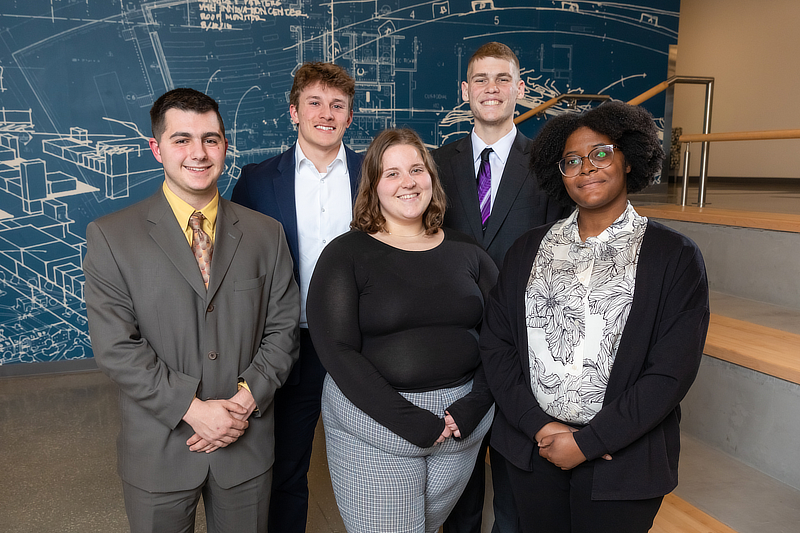
Ryan Horgan, Hugh John Dunkley, Oliva Knight, and Michael Shea
Joseph Balskus
Giovanni Zinn, Dawn Henning, and Elissa Nuzzo from the New Haven Department of Transportation
The City of New Haven’s Department of Transportation designs and provides safe and efficient roads for all drivers traveling through New Haven
To increase driver, pedestrian and bike safety between Legion Ave. to Kimberly Ave. on Ella T. Grasso Blvd. To ensure safe and effective traffic solutions, Syncro will be used for simulation to display how the proposed improvements will impact drivers, pedestrians, and cyclist.
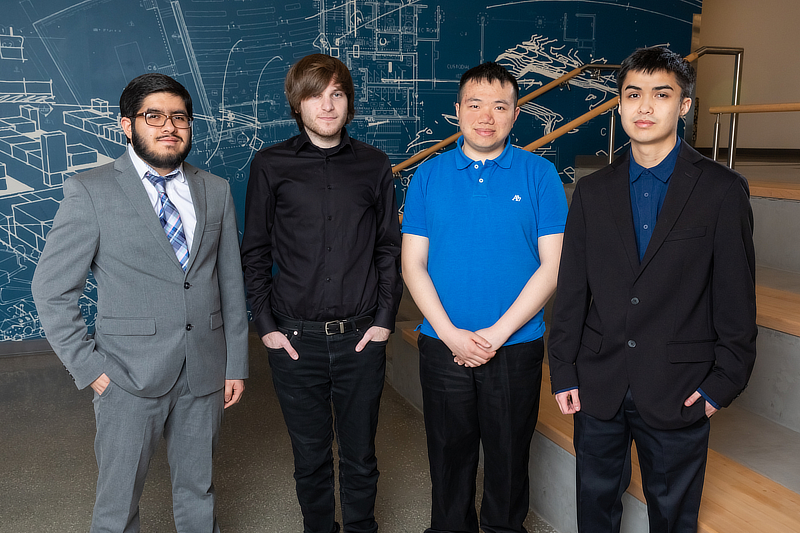
Robert Debinski, Emiliano Vega, Tyler Nguyen, Tyler Ruocco, and Lucien Zheng
Dr. Mehdi Mekni
To address the limitations of existing 2D room-based roguelite games by developing a new 3D game that is first-person-view and uses procedurally generated levels. By increasing engagement and reducing the need for repeated playthroughs, this new game seeks to offer a more balanced and satisfying gameplay experience. Developed using the Unity Game engine and set in a sci-fi environment, the proposed game will be evaluated through a Global Environmental Survey to verify and validate its success.
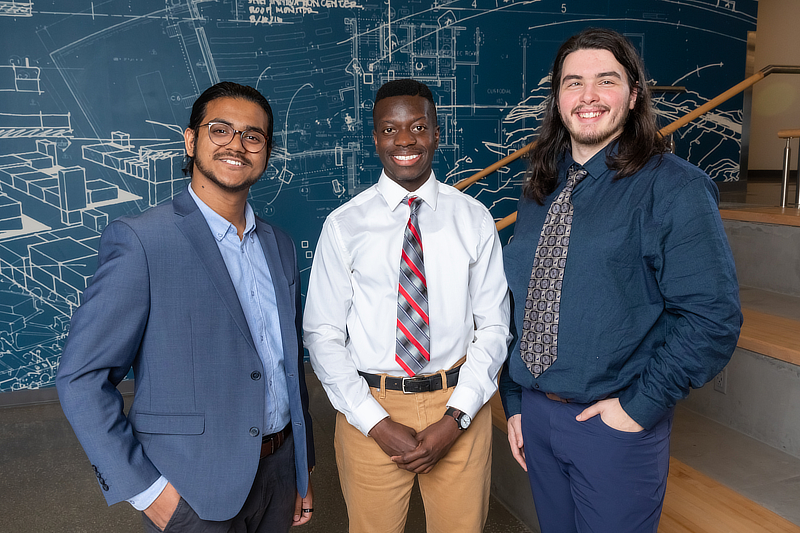
Muntasir Hossain, Killian Meehan, and Emmanuel Amoh
Dr. Mehdi Mekni
To develop and integrate of a chatbot at the University of New Haven to provide international students with 24/7 assistance. The liaison will have three modules: admission and immigration, tutoring, and graduation. These modules will address questions related to visa applications, assist in scheduling appointments with tutors, and optimize graduation timelines with respect to course offerings and prerequisites. Coordinating with university to design and develop the software, collect data, and train the chatbot. Validation and verification will be performed with the University Immigration Services and Tutoring and Academic Support Center.
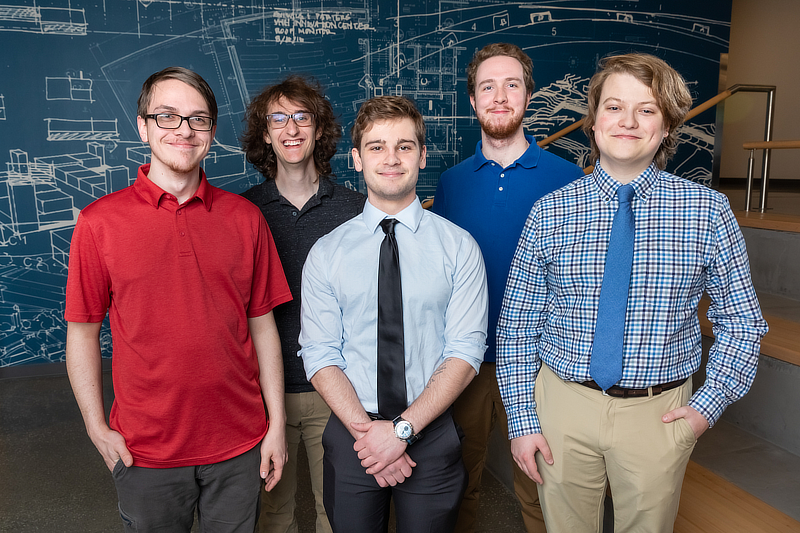
Devyn Souza, Josh Shaw, Matthew Smith, Jake Intravaia, and Nicholas Bennet
Dr. Mehdi Mekni
To provide healthcare professionals with electrocardiogram ECG data analysis to assess heart function and health. The software employs Machine Learning (ML) techniques, including feature extraction and confidence values, to identify potential abnormalities present in ECG. The ML model was trained using the PTB-XL electrocardiography dataset, and its open-source nature allows the scientific community to engage in its development and improvement to better match their needs, thus boosting transparency.
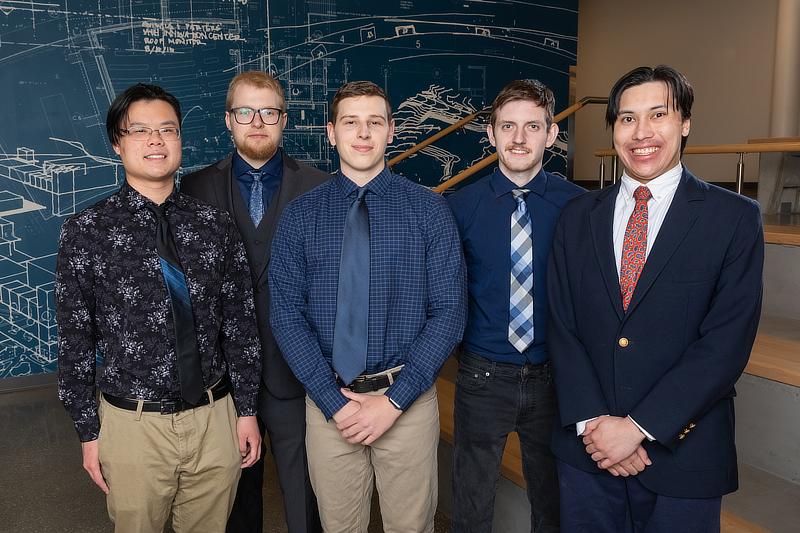
James Coleman, Jeremy Labelle, Thaddeus Murphy, Colin Hollister, and Steven Fung
Dr. Mehdi Mekni
To enhance the current firefighter training platform by incorporating an immersive virtual reality (VR) UAV training simulator that will enable the configuration, monitoring, command, and control of UAVs. This project will train both fire science students and professional firefighters by introducing them to advanced tools and resources. The simulator will enable trainees to utilize UAVs to identify areas of interest, view GIS data, evaluate crucial assets, and increase situational awareness. This provides a cost-effective and safe way for firefighters to learn and enhance their skills in the field.
Ahmed Muntasir Hossain
Dr. Mehdi Mekni
To provide a digital reputation management tool by analyzing social media content using multiple sentiment analysis engines. SASM collects data from Twitter, Reddit, and Tumblr, then filters and aggregates trends in sentiment to provide insights on content posted on social media. To validate the system, a case study focusing on major oil companies, including Shell, ExxonMobil, and BP, will be conducted. The outcomes of the study will explore how social media content about these companies varies depending on various factors.
Ryan Gibbons and Lester Barrio
Dr. Mehdi Mekni
To prevent firefighter injuries and assess performance. A performance study will be done with a fire and smoke simulation model that leverages CPU and GPU processing. The propose revising HellSmoke's architecture is to allow anywhere accessibility, flexible resources, and economies of scale. These improvements would enable fire science students and professionals to access training sessions from anywhere without compromising realism or interactivity. It can run on less powerful hardware, making training more accessible.
Ryan Horgan, Hugh-John Dunkley, Olivia Knight, and Michael Shea
Dr. Mehdi Mekni
To create an educational VR experience for teaching astronomy. Building on the computational power and astronomical databases of the open-source Stellarium platform, StellariumVR offers more portable and affordable options to students. By leveraging the strengths of VR technology, StellariumVR aims to create an unparalleled and engaging learning experience for students without requiring logistical considerations such as planetarium trips. This project offers an innovative and cost-effective solution to enhance astronomy education and increase students' interest in the subject.
Jake Sullivan, Jessica Berrios, Emily Carlow, Nathan Platt, and Matthew Swaggerty
Dr. Amir Esmailpour
To design a college enterprise network which will also have a PXE boot server implemented. Items such as cloud, firewalls, LAN/WAN, and IoT will be included as well as an international campus location. A theoretical implementation of the PXE boot server over an entire college enterprise will be presented alongside a physical implementation of the PXE boot server using the UNH lab computers. A DHCP attack will also be performed on the physical PXE server to assess the potential security vulnerabilities it may present.
Devonne Croll, Anta Fall, and Mariel Segovia
Dr. Amir Esmailpour
To design an enterprise network for Bradley International that is optimized for high performance and security. This topology prioritizes network segmentation which enables efficiency and provides additional security throughout the network.
Brian Gervais, Hayden Beauty, and Christian Nnonyelu
Dr. Amir Esmailpour
To tackle the shortcomings of modern recording applications that corporations currently use, and introduce our own secure device capable of recording, storing, and cataloging audio files.
Jason Ash, Brian Whritenour, Zachary Donovan, Chase Capano, and Justin Hollman
Dr. Amir Esmailpour
To research and explore the lingering security threats and solutions for an enterprise network with the increase in work from home activity. The design will be recreated, and a test bed will be made to explore and experiment with the current market solutions to working from home on secure networks over VPN or proxy.
Karrie LeDuc-Santoro
Dr. Amir Esmailpour
To design and build an enterprise network for a car manufacturing company using V2N and Bluetooth to secure a key fob. The network design will secure the usage of a key fob at the manufacturing level to ensure that the fob is safe to use in public settings.
Nelson Bordeleau and Justin Duprey
Dr. Ismail Orabi
Joseph Miranda, Collins Aerospace
Collins Aerospace, specialists in aerostructures, avionics, interiors, mechanical systems, mission systems, and power and control systems across the aerospace industry
To produce a cheap, effective, easy-to-use, state-of-the-art quick disconnect system for use in space applications. The quick disconnect must effectively seal closed on both ends when disconnecting and provide a minimal leakage passage for fluid upon locking. The team will improve the existing quick disconnect system and provide force and fluid dynamics simulation data to prove the viability of the design. A manufactured or 3D printed prototype will be produced to demonstrate the practicality of the mechanisms.
Jonathan Kolodziejczak (Mechanical Engineering) and Kristen Vogle (Biomedical Engineering)
Dr. Ismail Orabi
Nick Schreiber, Senior Product Engineer, Value Analysis/Value and OI Enterprise Engineering, Medtronic
Medtronic, a global leader in medical technology, services, and solutions
To redesign and build the actuator assembly of a surgical stapler currently on the market to simplify and reduce the cost of the actuator component while adhering to the assumptions and constraints provided by the company. The design improvement will increase the company’s competitive advantage in the market, meet Medtronic's annual cost-saving targets, and promote the Value Analysis, Value Engineering (VAVE) initiative.
Tyler Crowley, Remy Plattiers, and Ethan Silver
Dr. Ismail Orabi
Bill Welsh, Senior Technical Fellow, Sikorsky/Lockheed Martin
Sikorsky, a Lockheed Martin Company, is a global leader in supporting customers’ missions, strengthening security and advancing scientific discovery
To design a rig to test a few different inventions for the X2 helicopter that increase maneuverability in the case of an engine malfunction. The team will review previous teams’ work and rectify damaged components. Currently there is a tilt in the bearings that ride along the inside of the cam rig that will be rectified through force analysis by hand calculation and the use of the MSC software, ADAMS.
Daryl DeCohen Jr., Sebastian Silva, and Kendall Barrow-Spencer
Dr. Ismail Orabi
Rajiv Thapa, Associate Electrical Engineer, Edgewell Personal Care
Edgewell Personal Care, a trailblazing personal care company that leverages its employees’ creativity and passion to challenge convention and drive growth
To design and create a tumbler feeder mechanism that will individualize razor handles coming out of the feeder. A conveyor belt will be used to feed the razor handles through the tumbler feeder. A double drum system will be utilized; one drum will be vibrating, the other drum will be rotating with interchangeable pegs located within the interior. Tests of force, stress, and strain will all be observed to analyze any areas of improvement or concern. The addition of the tumbler feeder should provide an increased rate of efficiency and speed for the current assembly line process.
Brian Rowe and Peter Violano
Dr. Ismail Orabi
Phil Smith, Sr. Analytical Engineer, RBC Bearings
RBC Heim, provider of global industrial, aerospace, and defense customers with unique design solutions to complex problems and an unparalleled level of service, quality, and support
To design and construct a bearing capable of reading loads, which allows for a more in-depth understanding of the stresses the bearing experiences. Machine downtime can be very costly to customers, especially in the canning industry. The design aims to prevent errors in downtime calculations arising from assumptions, and replace the calculations with a real-time reading on the status of the bearing. The strain gauge measurements will be transmitted wirelessly or with minimal wiring due to the dynamic nature of bearing applications.
Sean Purnell and Kevin Bologna
Dr. Ismail Orabi
Paul Spahr, Principal Project Engineer, Damian Bianchi, Vice President, and Matthew Schomaker, Chief Engineer, all from the Control Valve Group
The Lee Company, designer and builder of state-of-the-art miniature fluid control products which exceed customer expectations for utility, performance, and quality
To design and build a tabletop apparatus to test pneumatic leakage of a small elastomeric specimen. A seat contacts the elastomer and the air leakage between these two parts must be read in standard micro-liters per minute. The test is conducted by an operator who will set applied load and air pressure and record the results in a program. Data collected includes Load (g) vs. Air leakage (SμLPM) graphs.
Justin Haire, Adriel Gill, and Jaden Sylvester
Dr. Joseph Levert
Clifford Esmiol, Maintenance Manager
FirstLight Power Services LLC, owner and operator of various hydroelectric, solar and wind assets that provide clean renewable energy to the electrical grid
To design and implement a bearing oil cooling system at the Falls Village hydroelectric power generation station. The current oil cooling system relies on river water to remove the heat generated by the bearing. An air oil heat exchanger system to cool the bearing oil is proposed. The redesigned cooler will provide greater temperature control of the bearing lubricating oil, thus improving system reliability. In addition to controlling temperature more effectively, the proposed solution will no longer require cooling water permits.
Abdulrahman Aljalidi (Industrial and Systems Engineering); Alexander Betro, Jason Nguyen (Electrical Engineering); Devin DiCocco (Electrical & Computer Engineering); and Tyler Kanter (Mechanical Engineering)
Drs. Mohsen Sarraf and Laurence Levine
Shanthala Nagesh Kumar, Hardware Test Automation Engineer; Michael Yanofsky, Regulatory & Compliance Engineering Supervisor – Fire Safety
Honeywell Fire-Lite, provider of cost effective non-proprietary fire alarm solutions for small to medium buildings at educational institutions, hospitals and health care facilities, commercial complexes, retail spaces and government buildings around the world
To design, fabricate, and test a modernized Regulated Notification Appliance Certification (NAC) Tester to replace the existing legacy device and provide a sustainable and more usable system. The tester will simplify the use of the system during fire panel qualification testing, reduce test configuration errors, modernize the system’s components, and provide a supportable code base.
Jordan Berrocales, Thomas Erdmann, and Melanie Methot (Mechanical Engineering); Ryan Langlois, Cole Tardif (Electrical & Computer Engineering); and McKenzie Lewis (General Engineering)
Dr. Joseph Levert
Philip Gorman, Interim Director – Global Phage Discovery, Manager – U.S. Antibody Discovery, Abcam
Abcam, a leading global proteomics pioneer that identifies, develops, and manufactures quality biological, protein, and custom cell engineering tools to the life science research and clinical communities.
To design and build a highly automated system that will perform two of the major steps of the currently manual Western Blot Process for protein detection. The design will streamline the automation of manual inputs and the use of multiple samples instead of typical individual samples. The system will be designed to be almost fully automated from start to finish with push button operation.
Kiefer Neumann, Brian Sanfilippo and Ian Robinson (Mechanical Engineering); Laela Butow (Electrical & Computer Engineering); Anthony Varbaro (Computer Engineering); and Anthony Sihaphong (Electrical Engineering)
Dr. Joseph Levert
Dr. Chong Qiu
National Science Foundation and National Aeronautics and Space Administration
To use high-altitude ballooning with portable ozone sensors to enable stratospheric ozone measurements during the 2023 & 2024 solar eclipses. The team will design and build several payloads that will be sent into the stratosphere from optimized balloon launch locations during the 2023 and 2024 solar eclipses.
 TEAM MEMBERS
Alyssa Alves, Evan Lima (Mechanical Engineering); Michael Gentile (Electrical Engineering); Laela Butow, Michael Daly, and Justin Stewart (Electrical & Computer Engineering)
Dr. Mohsen Sarraf
General Dynamics Electric Boat, provider of design, construction, and lifecycle support of submarines that meet standards of excellence for the U.S. Navy.
To design and mount a transceiver that is capable of transmitting and receiving data through the two-inch-thick metal plate of a submarine’s hull. This will avoid the cost of recertification since radio signals neither propagate in water nor through metal. Using a software-defined radio device, a message will be sent through ultrasound transducers and processed using MATLAB to send and receive an image through the plate of steel. The transceiver will be housed in an enclosure that has a watertight seal.
We thank our industry sponsors who served as customers for our students as well as supporting their prototyping expenses. As customers, they gave valuable time and insights that uniquely benefited our students with an experiential design education in a real-world setting, which greatly complements the team mentoring by our faculty colleagues. Their generous commitment to our students brought their design education to life.