
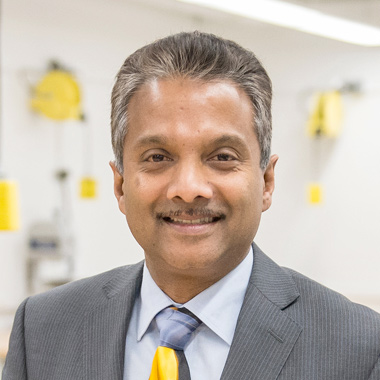
 Ronald S. Harichandran, Ph.D., P.E., F.ASCE
The Capstone Design Expo is an opportunity for our students to showcase the results from their capstone design course. Student teams work to create a specific design solution for a "customer’s" real and unique need. Design and design education are, by their nature, experiential and collaborative, and our design team sponsors are our key collaborators. As a result of this collaboration, students bring energy and new ideas to meet the design need.
The design projects enable our students to put into practice what they have learned to prepare them for the workforce.
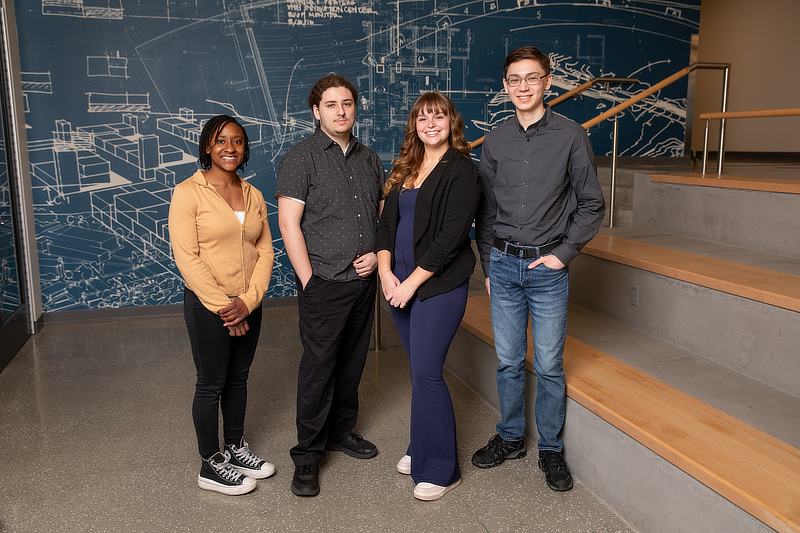
Kaitlyn Benes, Justin Caron, Andrew Luewe, and Damaris Williams
Dr. Nagasree Garapati
Kyle Schmidt, Process Evaluator, Albemarle Corporation
Albemarle Corporation – Committed to building a more resilient world
To design and simulate an efficient system to produce bromine from a brine source. A chlorine reaction-dependent system will be designed for Safi, Jordan, and an electrolysis dependent system will be developed for Magnolia, Arkansas, USA. The two systems will be designed and analyzed for cost, sustainability impact, and regulatory compliance. The project seeks to determine which system will best produce bromine with limited sustainability impact and greatest financial opportunity.
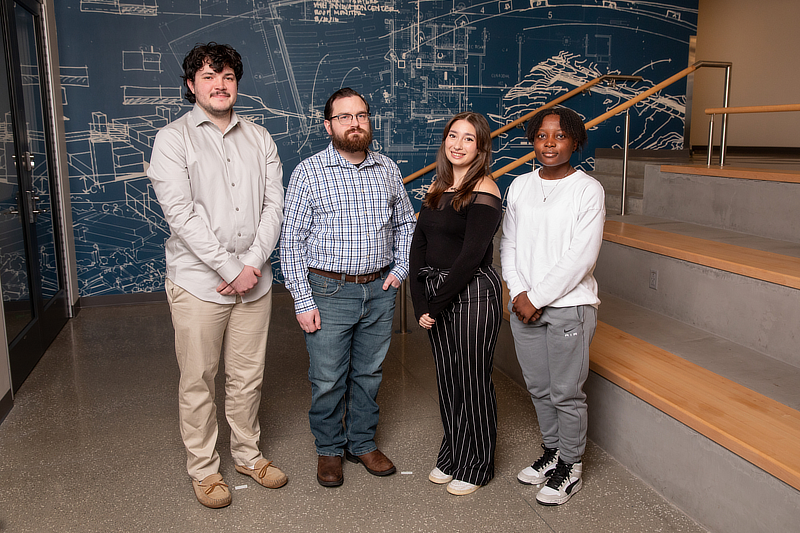
Gia Burgener, Thomas Gregoire, Timilehin Oluwole, and Cody Velikaneye
Dr. Nagasree Garapati
Maxwell Steffen Cameron-Jones, Supervisor, Process Engineer, FuelCell Energy Inc.
FuelCell Energy Inc. – Enabler of a world empowered by clean energy
To assess the integration of methanol reformation and solid oxide fuel cells (SOFCs). This is done by designing a suitable methanol reforming process for hydrogen production to be fed into a solid oxide fuel cell, based on the fuel specifications. The performance of the methanol reformation process will be optimized by using material and energy balance, including heat integration between the fuel cell and the methanol reformer.
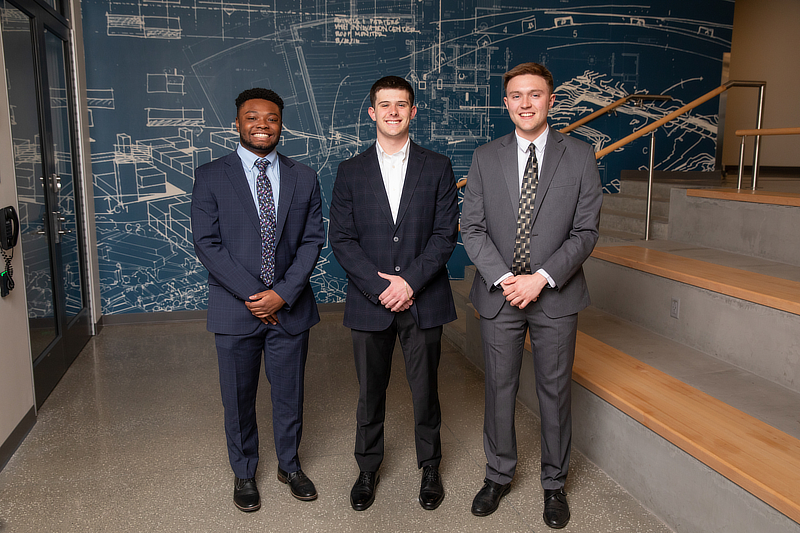
Benjamin Collins, Ethan Thevenot, and Daniel Oswald
Dr. Nagasree Garapati
Daniel Burns, Chemical Engineering Industrial Advisory Board Member
To develop an economical process and facility to convert manure and some farm waste from Burns Dairy Farm that creates and captures methane gas for sale or use on the farm and reduces the farm’s carbon footprint. This project seeks to develop a farm operator-friendly process that can be implemented across small farms to aid in their manure digestion and reduce uncontrolled methane emissions. The three-step process will include feed preparation, where manure is conditioned to create a liquid; anaerobic digestion, where the liquid manure mixture forms methane and other biogases; and post separation, where the biogases and digestate are separated.
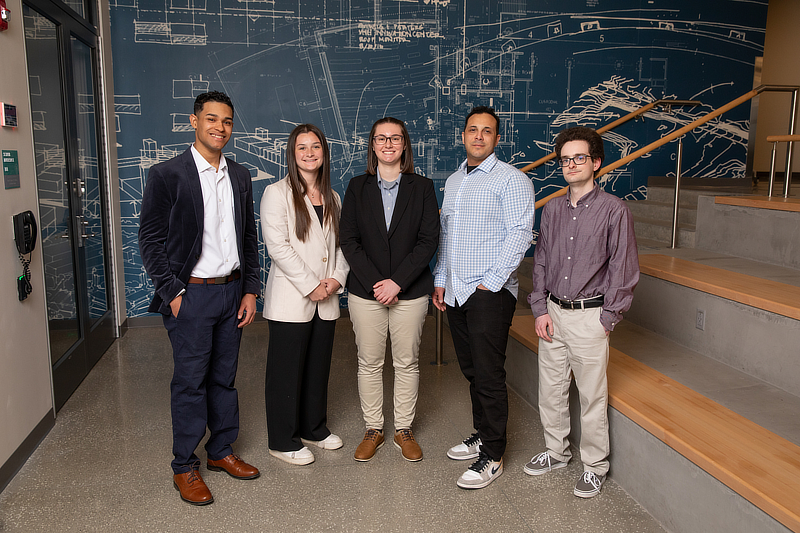
Raymond Feliz Sanchez, Gabriella Zint, Gabriella Stickle, Brian Lawson, and Eduardo Mariano
Dr. Hyungjoo Choi
Hyungjoo Choi (Structural Engineer), Falcon Group
The Falcon Group – A full-service, client centric engineering and architecture firm, focusing on delivering success stories and having a positive impact on communities
To stabilize and repair a parking structure from existing lateral displacements and implement preventive measures to combat future lateral displacements. The design team will complete an analysis of existing conditions of the parking structure, including critical columns and active soil/water pressures acting on the north retaining wall.
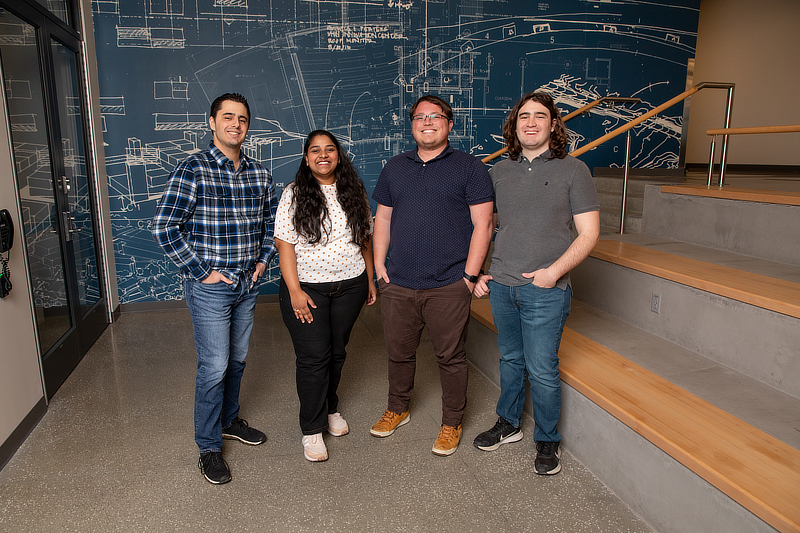
Victor Huisman, Owen Santos, Christian Tomaso, and Komalika Sarihaddu
Dr. Byungik Chang
Louis Annino and Laura Miller, facilities office, University of New Haven
University of New Haven – committed to sustainability and reduction of its environmental impact
To determine whether solar canopies at the Hoffman Parking Lot are feasible structurally and economically. The team will conduct economic analysis, as well as structural analysis for potential solar canopies to be installed at the Hoffman Parking Lot.
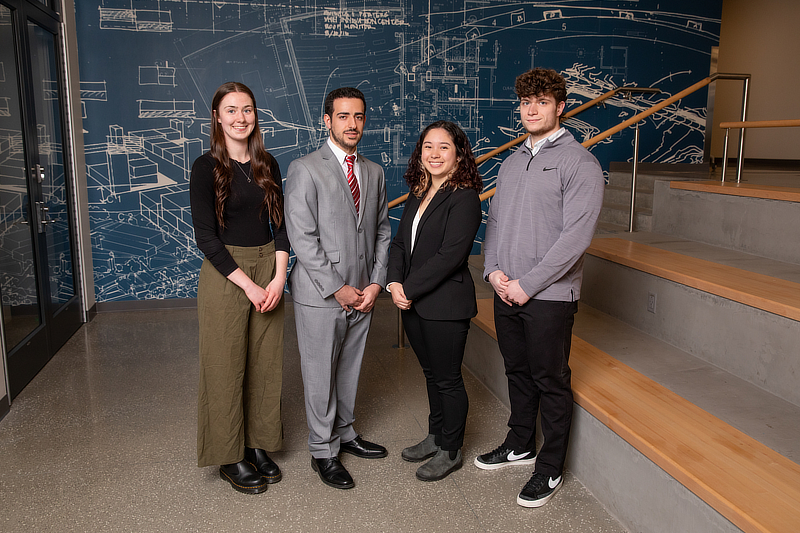
Catherine Cravinho, Filipe Jorge, Joseph Nolan, and Helena Koch
Professor Joseph Balskus
Elias Ghazal, town engineer, Town of Fairfield
Town of Fairfield. Fairfield, Connecticut — a charming and thriving town featuring five miles of shoreline on the Long Island Sound
To improve the safety and efficiency of traffic for motorists, pedestrians, and bicyclists in the surrounding neighborhood around the North Stratfield Elementary School by implementing traffic calming measures. An analysis of crash data, intersection sight distance, and traffic volume will be conducted to design these traffic calming measures. Several roundabouts will be implemented at various intersections to improve traffic flow.
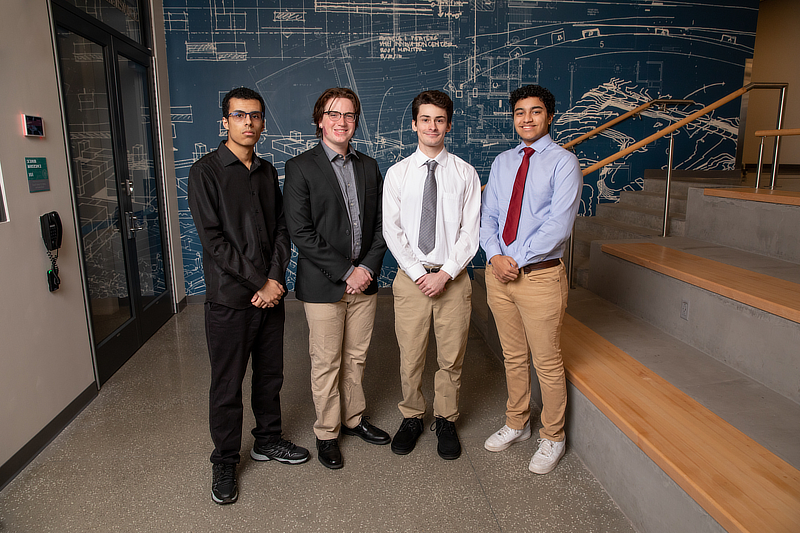
Spencer Wondolowski, Kenneth Yao, Tim Fraedrich, and Rohith Reddy Tangadipalli
Dr. Mehdi Mekni
To design and develop Chembase, a holistic solution merging cost analysis, inventory management, precise application calculations, a chemical database, and scheduling for golf course chemical applications. This solution aims to reduce expenses, improve inventory handling, and automate formula generation. The mobile app will enhance on-field management, providing real-time updates for better decision-making and efficient chemical use. With cross-platform accessibility (iOS, Android, Web), the objective is to enable portable field management, empowering greens-keepers with live updates.
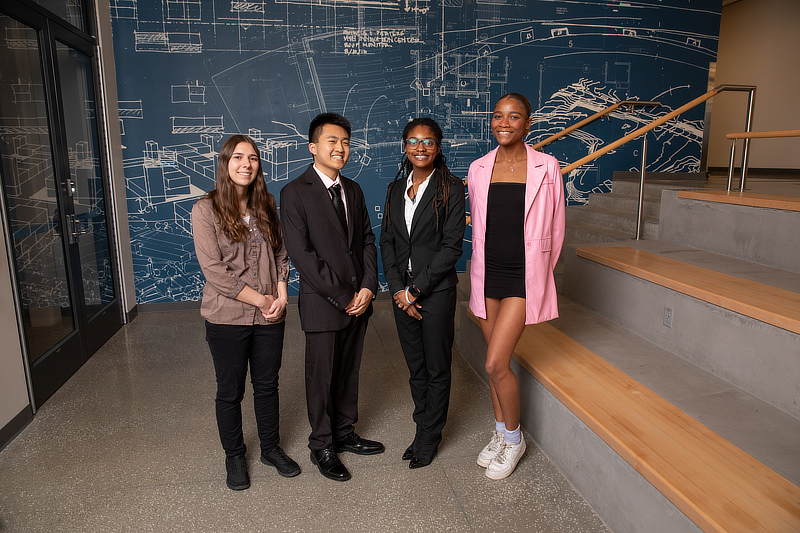
Alaa Ramzi, Connor D. Paul, Nicolas Perez, and Sean M. Lucibello
Dr. Mehdi Mekni
To design and develop a customized gamified educational app for college athletes, addressing their academic and athletic challenges. By integrating narrative-based gaming, mindfulness exercises, and practical tools, the app will target improved academic performance, mental health, time management, and community support. The app intends to elevate grades, alleviate stress, and offer tailored resources. Additionally, it seeks to establish a supportive network among athletes while assessing the impact of these features on mental well-being and academic success. The initiative leverages digital game-based learning to provide innovative solutions tailored to the unique needs of student-athletes.
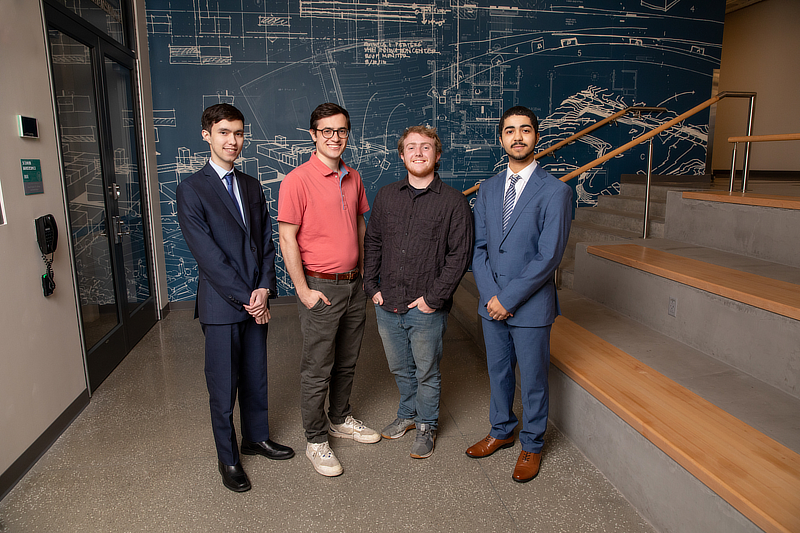
Aliyah Jones, Tony Khamphouy, Kaylie Neal, and Julia Roberts
Dr. Mehdi Mekni
Fred Casserta, Pleiadian Systems Corporation
To leverage VR technology to design and implement immersive learning environments that recreate authentic burn rooms and investigative processes, aimed at revolutionizing fire forensics and arson investigation. By collaborating with experts and creating three simulated burn rooms, the project seeks to transform experiential learning into an immersive educational tool for future arson investigators. The objective is to enhance training, reduce costs, and minimize the risks linked to traditional methods, ultimately reshaping the approach to arson investigations for the benefit of students and industry professionals.
James Mok, Matthew Lamour, Sean Vargas, and Kyle Muldoon
Dr. Mehdi Mekni
Fred Casserta, Pleiadian Systems Corporation
To design and develop an immersive, cost-effective VR environment for firefighter training, streamlining scenario setups and providing hands-on experience. This VR platform will replace costly physical setups, ensuring easy replication and standardized data collection. It aims to enhance firefighter skills and familiarity with stress-inducing scenarios, drawing from studies that show immersive training improves proficiency. Additionally, by simulating controllable environments, the goal is to reduce stress levels, benefiting mental health based on VR-based mindfulness findings. The project will provide an accessible, reusable solution to tackle crucial firefighter health issues.
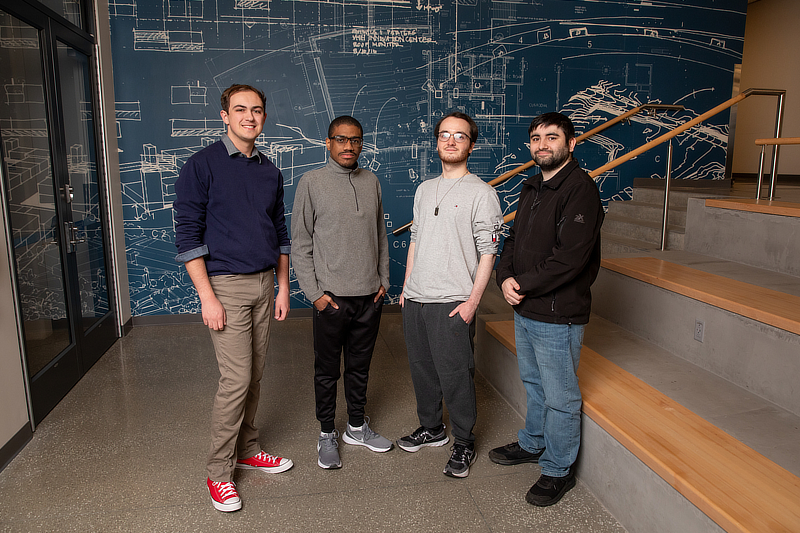
Samuel Halpern, Anthony Iavasile, Alec Oko, and Marcus Gordon (Cybersecurity & Networks)
Dr. Tirthankar Ghosh
To create a password grader that grades user-entered passwords and guides users to choose secure passwords. The system will use an existing password cracking tool and custom algorithm to assist users.
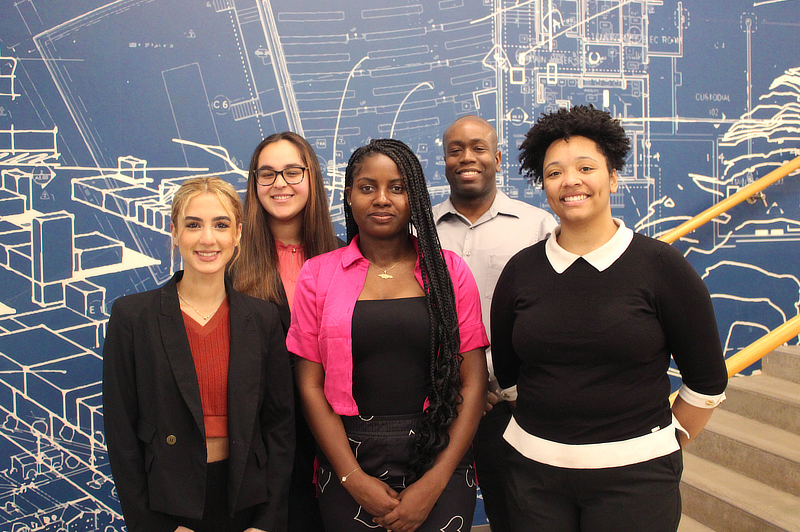
Destiny Ray, Victoria Soto, Hanaa Mered, Kyle Conyers, and Jacian Johnson (Cybersecurity & Networks)
Dr. Tirthankar Ghosh
Carlos Gonzalez
Assa Abloy — creator of top-tier access control solutions, ensuring safety and convenience through innovative technology
To build a threat intelligence prototype system for Assa Abloy’s backend products. The system will make API calls to various threat portals, collect existing threat information, create indicators of compromise (IoCs), design and populate a database, and create a front-end web-based portal to extract and display threat information, as well as package and send IoCs to threat-sharing platforms.
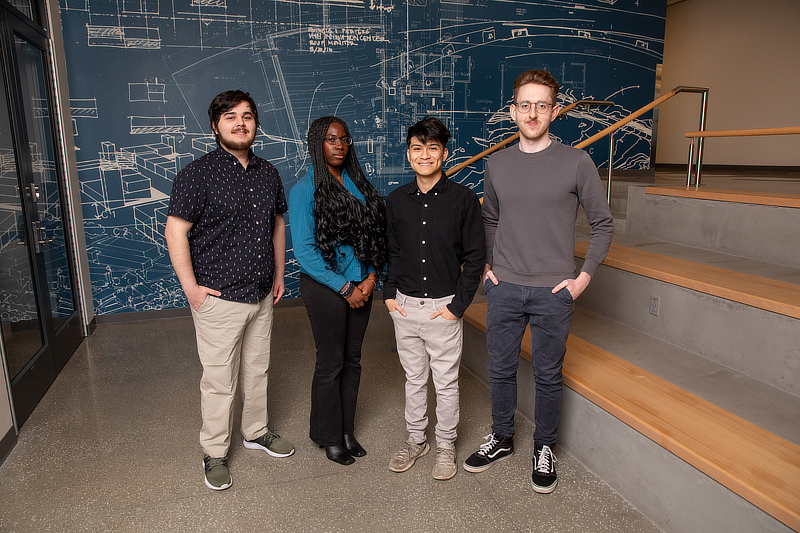
Sankofa Benzo, Gerald Camp, Christian-Michael Hussain, and Joseph McNelis
Dr. Tirthankar Ghosh
To create models using machine learning classification systems for detecting phishing emails. This project will select features and apply several machine learning classification models to compare efficiency and other performance measures.
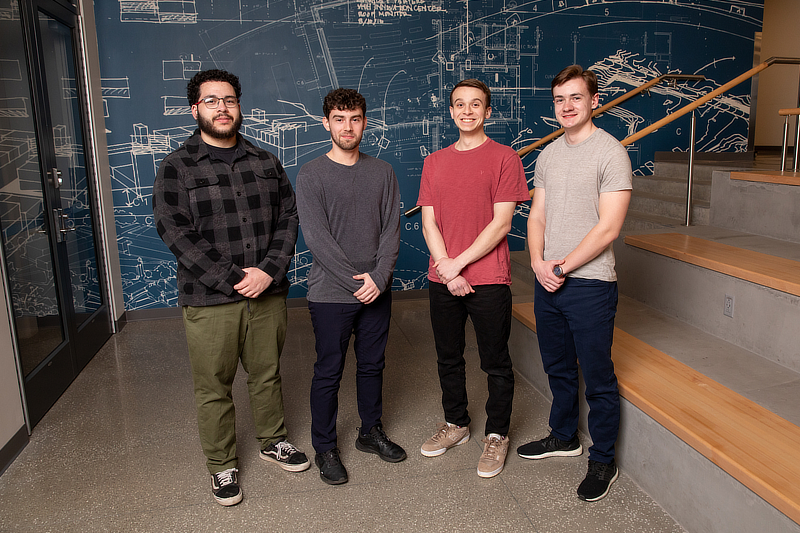
Nicholas Dubois, Joshua Baer, Jonathan Chute, and Jordan Saleh
Dr. Tirthankar Ghosh
To create a web reconnaissance and exploitation toolkit that will search for endpoints from any webpage, determine the usability of those endpoints, determine services running, and conduct vulnerability assessments.
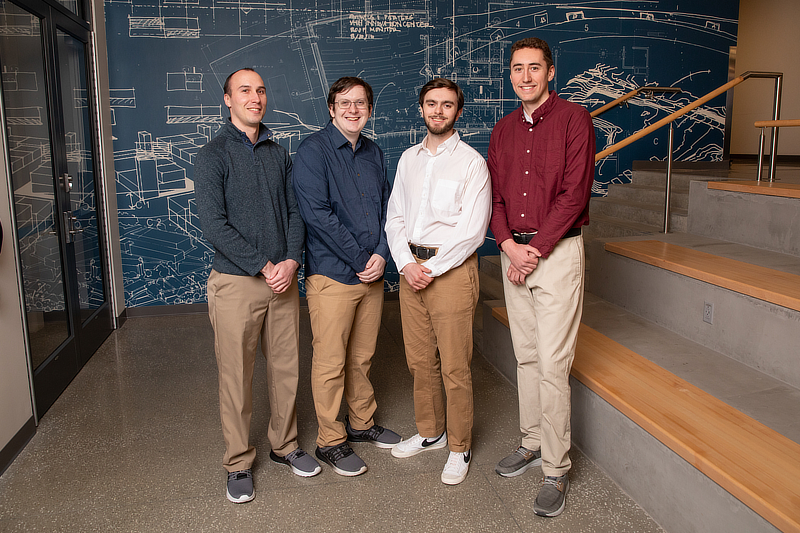
Jarred Foley, Zack Trowbridge, Steven Leclerc, and Bryan Sullivan
Dr. Tirthankar Ghosh
To design and deploy a honeynet containing high-interaction honeypots mimicking production services. The system will test various penetration testing tools in the honeynet, create attack vectors, generate logs, and analyze them to understand attack patterns.
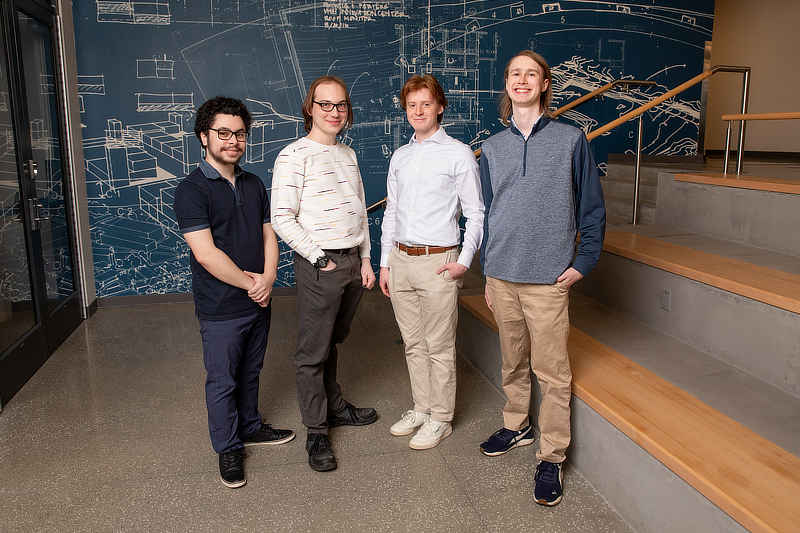
Xenia Sitterer, Nathaniel Smith, Colin Sullivan, and William Danny Vasquez
Dr. Tirthankar Ghosh
To design and implement a threat assessment application within a network that will continuously scan the network with user-selected plugins and evaluate and improve the security posture of an organization. The system will also input existing threats from various threat portals and be able to generate and export threat reports.
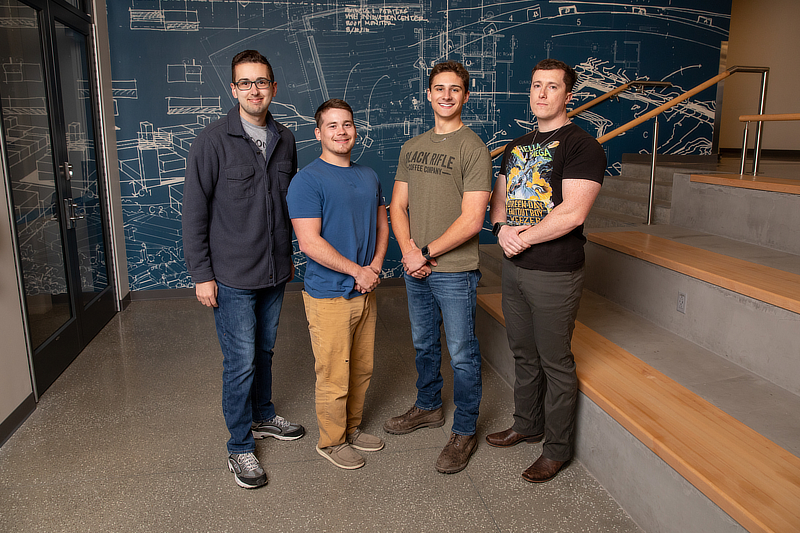
Kenneth Duffy, Devin Cianciolo, Ryan Underhill, and Jake Thayer
Dr. Tirthankar Ghosh
To design and implement a drone location and movement-tracking system with a 360-degree horizontal and a 180-degree vertical platform using a unidirectional antenna connected to a software-defined radio (SDR). The SDR will follow the drone and locate its movement on a grid. The project will also involve evaluating security vulnerabilities of the system and proposing mitigation strategies.
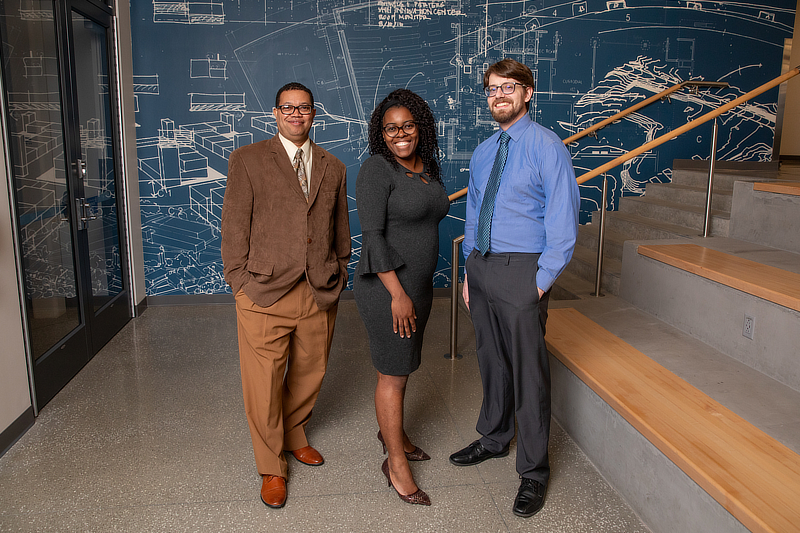
Enive Bien-Aime, Daniel Gaewski, and Devon Gonzales
Dr. Mohsen Sarraf
Dr. Ali Golbazi and Dr. Christopher Martinez
University of New Haven
To design and build a low-power AM radio transmitter to satisfy the requirements of FCC part 15 in a form factor that is cost effective (less than $150) for mass production. The transmitter must also be tested to show it has a range of up to 200 ft outdoors.
Kevin Harper, Electrical and Computer Engineering
Dr. Mohsen Sarraf
University of New Haven ECECS Department
To explore and elaborate upon existing work regarding a unique and counter-intuitive concept in ultrasonic phased array technology. A system is proposed that will establish and enable the control of a beam of highly directive audio modulated at ultrasonic frequencies. The user will be able to steer the beam remotely across three dimensions in real-time. This system not only aims to provide a unique experience to the audience but also addresses the need for a more advanced solution in directional audio applications.
Nicholas Khaimov, Thomas Cafarelli, and Ziyi Pan
Dr. Joseph A. Levert
Joseph Martone, Senior Manager, Industrial Design, Assa Abloy
Assa Abloy – Creator of top-tier access control solutions, ensuring safety and convenience through innovative technology
To address building break-ins by intruders using “Under-the-Door" attack tools on doors with mortise and cylinder locksets. This will be accomplished by designing door lock features that force the intruder to take more time and generate more noise during an intrusion. The designs will be compliant with building and ADA codes while ensuring manufacturability.
Kyle Roy and Greg Castronova
Dr. Ismail Orabi
Nick Schreiber, Senior Product Engineer, Medtronic
Medtronic, a global leader in medical technology, services, and solutions
To design a cost-effective battery tube that can replace the current design of the MiniMed 780G Prime series Insulin Pump. The design must maintain less than 90 mili-ohms of resistance in the electrical loop. The design must not be integrated within the case. The design must maintain reliability over the four-year warranty period. The objective is to develop a simplified component responsible for creating an electrical loop to ensure uninterrupted energy flow.
Kevin Burg and David Tabak
Dr. Ismail Orabi
Bill Welsh, Senior Technical Fellow, and Joseph Nicholas, Structural Engineer, Sikorsky Aircraft
Sikorsky, a Lockheed Martin Company – A global leader in supporting customers’ missions, strengthening security and advancing scientific discovery
To design, build, and test a hydraulically actuated vibration control system. Actuators are used on an aircraft to control the vibration created by the blades and rotor. The current actuators used are electric, which can be slow and sluggish when the frequency of vibration changes due to a maneuver being performed. The designed actuator system will be completely hydraulic and use LabVIEW data system to control the servo valve using accelerometer, position sensor and command voltage.
Phillip Hinojosa and Jack Bassett
Dr. Ismail Orabi
Rajiv Thapa, Marc D’Urbano, and Matthew Lang
Edgewell Personal Care – A trailblazing personal care company that leverages its employees’ creativity and passion to challenge convention and drive growth
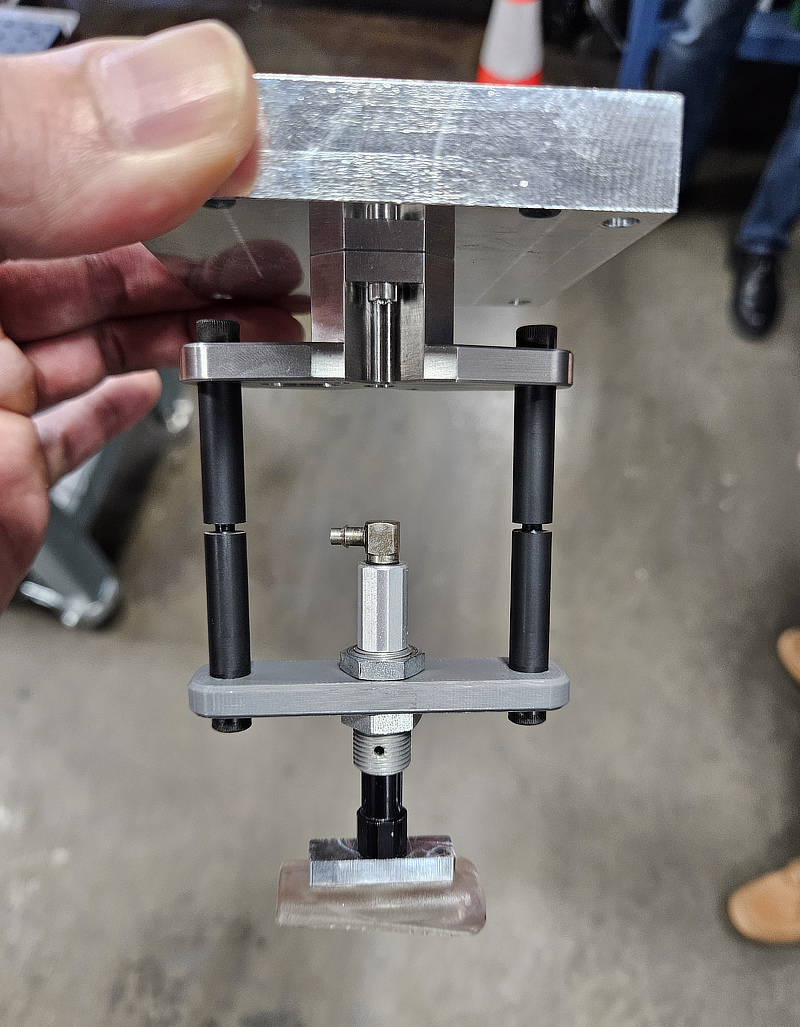
To design and manufacture an end-of-arm tool (EOAT) that attaches to a robot operating on an assembly line. The EOAT will be connected to a vacuum generator that can pick and place razors from the conveyer belt. The current EOAT, a mechanical pneumatic gripper, will be simplified by using only a vacuum generator that includes fewer moving parts resulting in less weight and stress for the robot. The design will reduce wear and tear on the existing Fanuc M-1iA robots and enhance the longevity and efficiency of the robot, leading to improved overall performance.
Nicholas Demayo and Alejandro Ramos
Dr. Ismail Orabi
Phil Smith, Sr. Analytical Engineer, RBC Bearings
RBC Heim – Provider of global industrial, aerospace, and defense customers with unique design solutions to complex problems and an unparalleled level of service, quality, and support
To optimize an existing ball stud bearing design to have an optimal strength to weight ratio by only changing the internal geometry. The design will be validated by using ANSYS-FEA and manufacturing and conducting physical tests on the refined geometry.
Jonathan Gladding and Hassan Soliman
Dr. Ismail Orabi
Michael A. DiOrio, Micro-Dispense Group, The Lee Company
The Lee Company – Designer and builder of state-of-the-art miniature fluid control products which exceed customer expectations for utility, performance, and quality
To design and build a test unit for the Lee Company’s IEP series valves to evaluate its performance based on durability. The test stand is required to house 20 cycling valves undergoing a water pressure of 150-800 PSIG, at a flow rate of 40 standard liters per minute, 3 gallons per minute. The test stand should undergo 2.5-4 million cycles.
William Horowitz (Computer Engineering), Leanne D’Acounto (Chemical Engineering), Matthew Windsor (Electrical Engineering)
Dr. Mohsen Sarraf
Dr. Mohsen Sarraf
To explore the potential of harnessing electrical energy from the process of photosynthesis in plants. Recognizing that plants naturally produce electrical signals during this process, our primary goal is to extract and utilize this electricity, effectively transforming plants into sustainable energy sources.
Anna Ort and Sebastiano Locascio (Mechanical Engineering); Carolina Sousa De La Cruz (Computer Engineering); Marlon Brands, Franco Lituma, and Thamer Rasheed (Electrical Engineering)
Dr. Mohsen Sarraf
Shanthala Nagesh Kumar, Regulatory Engineer - Fire, Honeywell
Honeywell – A company dedicated to the life safety of people through advanced productivity, sensing, safety, and security technologies
To create a fixture to execute the Endurance and Overload test, which is specified in UL 864. This will be accomplished by programming the UFACTORY xArm 5 Lite Robotic Arm, a commercially available robot, to follow several preset patterns that allow it to function cohesively with the panel. Instructions will be provided to the user on how to reprogram the robotic arm to a custom need. The test fixture will be enclosed for protection and mounted onto a cart for mobility. The project will enhance commercially available products and allow business continuity in the face of failed test equipment.
Alexander Castromonte and Aidan Halloran (Computer Engineering); Ian Allison, Nicholas Babich, and Robert Hibbard (Mechanical Engineering)
Dr. Joseph A. Levert and Dr. Chong Qiu
Mr. Kiefer Neumann, Mechanical Engineering
NASA Space Grant Consortium, working to expand opportunities for Americans to understand and participate in NASA’s aeronautics and space projects by supporting and enhancing science and engineering education, research, and public outreach efforts.
To enable longer duration gathering of stratospheric ozone data during the April 8, 2024, total solar eclipse using existing high-altitude helium balloons. The design will employ a newly designed, low-leakage valve to control the venting of helium from the balloon. The venting will enable the balloon to stay on-station longer at the desired 20–25-kilometer (12.4-15.5 mile) altitude. The vent valve will use an existing ground to balloon radio communications station, a feedback control loop, software, and additional components to monitor conditions and control venting throughout the flight.
Edward Sweet and Alura Levy (Mechanical Engineering); Trent Coltran (Electrical and Computer Engineering); and Ancil Clayton Jr. (Electrical Engineering)
Dr. Joseph A. Levert
Alex Mayne, Senior Automation Engineer and Eric Zeidler, Automation Engineering Manager – IMH
The Lee Company – Designer and builder of state-of-the-art miniature fluid control products that exceed customer expectations for utility, performance and quality
To design multiple fixtures for the coining (precision indenting) that will enable various sizes of check valves to be precisely indented for new product development. The design also includes a coining fixture storage rack. The device will collect the coining force data used in the coining operation with a load cell from which the data will be collected by a programmable logic controller (PLC). The new coining fixtures will benefit the company by reducing/eliminating the need to interrupt production runs to coin parts for product development.
Jared Gabriele, Jake Nienstadt (Mechanical Engineering); Ben Cesero (Computer Engineering); Erin Erdenebat, Ben Deshpande, Abdelkader el Idrysy (Electrical Engineering)
Dr. Mohsen Sarraf
General Dynamics Electric Boat, designer and manufacturer of nuclear submarines used by the United States Navy
To design a device that will measure the salinity in water using ultrasound in a dynamic environment and display the results in a salinity vs signal speed graph. Various environmental factors such as temperature, water pressure, and water flow rate will be considered for signal reception. The project seeks to measure the salinity of water in a non-invasive and non-destructive way.
We thank our industry sponsors who served as customers for our students as well as supporting their prototyping expenses. As customers, they gave valuable time and insights that uniquely benefited our students with an experiential design education in a real-world setting, which greatly complements the team mentoring by our faculty colleagues. Their generous commitment to our students brought their design education to life.