
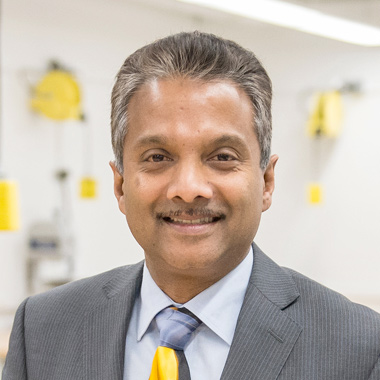
 Ronald S. Harichandran, Ph.D., P.E., F.ASCE
The Capstone Design Expo is an opportunity for our students to showcase the results from their capstone design course. Student teams work to create a specific design solution for a "customer’s" real and unique need. Design and design education are, by their nature, experiential and collaborative, and our design team sponsors are our key collaborators. As a result of this collaboration, students bring energy and new ideas to meet the design need.
The design projects enable our students to put into practice what they have learned to prepare them for the workforce.
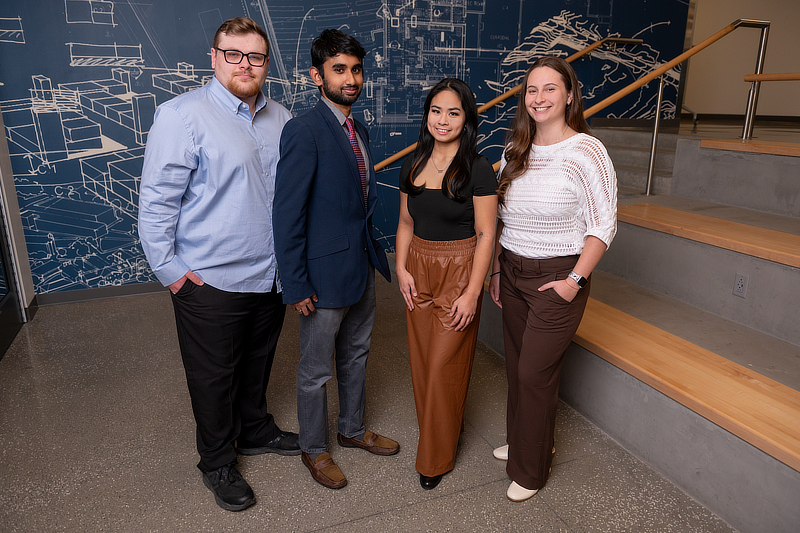
Angelica Dequina, Andrew Dunning, and Shreeganesh Venkatesh (Chemical Engineering); and Alexis Pishnyuk (General Engineering)
Dr. Nagasree Garapati, PE
Kyle Schmidt, Process Evaluator, Albemarle Corporation
Albemarle Corporation – Committed to building a more resilient world
To develop and simulate a highly efficient process to produce 5,000 metric tons per year of diphenylethane (DPE) with a purity of at least 99 wt.%. The proposed system integrates a batch reactor with a continuous separation process, including distillation columns, to isolate the product from unreacted reactants and byproducts. The project aims to optimize production efficiency and product purity while minimizing environmental impact, ensuring safety, achieving regulatory compliance, and maximizing economic viability.
Michael Benedetto, Chisom Okoro, and Brandon Ruiz
Dr. Nagasree Garapati, PE
Max Fernandez, Associate Process Engineer, FuelCell Energy Inc.
FuelCell Energy Inc., a leading innovator in high-efficiency combined heat and power
To design and develop an advanced exhaust heat recovery heat exchanger for molten-carbonate fuel cell systems with the goal of achieving system efficiencies exceeding 90% through innovative methodologies. The project also investigates the capture and treatment of condensed water from exhaust gases as a sustainable, reusable resource for fuel cell reactions. This design seeks to enhance overall system performance, promote circular water utilization within the fuel cell process, and align with clean energy and environmental sustainability goals.
Marcella Yushuvayev, Ella Surdyka, and Jorge Encalada
Dr. Byungik Chang, PE
Cynthia Kaplan, Associate AIA Principal, LEED AP Building Design & Construction
Cynthia Kaplan, LEED, a consulting company that specializes in the LEED certification process
To evaluate the current site conditions and develop design concepts that address the accessibility challenges of the play area caused by inadequate drainage systems. The proposed design solutions will focus on low-maintenance approaches while adhering to the existing LEED certification standards.
Al Rebeiro, Hayley Carrasco, and Ava Anastasio
Dr. Byungik Chang, PE
Laura Miller and Louis Annino, Office of Facilities, University of New Haven
University of New Haven’s Facilities Office
To design and implement an innovative energy storage system for four residential halls that supports renewable energy integration and reduces the campus’s greenhouse gas emissions. This project aims to evaluate and deploy renewable energy solutions and advanced storage technologies for its residential buildings.
Brandon Bernier, Ryan Domico, and Jeniffer Guartamber
Dr. Byungik Chang, PE
Tyler Brett, Structural Engineer III, HNTB and Jordy Padilla, Project Engineer, HNTB
HNTB Companies, connecting people and places by designing and advancing transportation infrastructure for public and private clients
To develop three preliminary designs for the rehabilitation of Span 13 on the Gold Star Memorial Bridge, which connects Groton to New London, Connecticut. The goal is to create a feasible design that enhances the structural capacity of the steel components while extending the service life of the superstructure. For the selected preliminary design, it will provide a cost estimate, a set of basic plans, and design calculations.
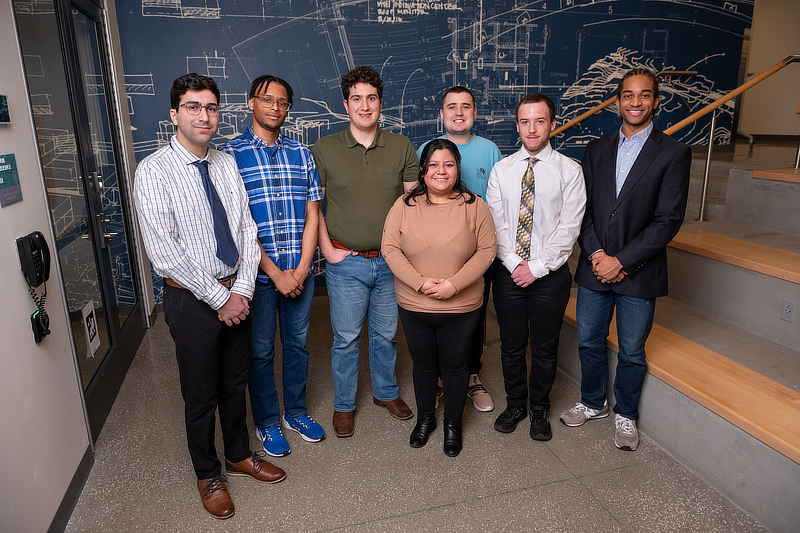
Daniel Cerulli, Kian Fatemi, Nicholas Larkin, Lucero Melendez, Joshua Stewart, Declan Straut, and Johnell Taylor
Dr. Mehdi Mekni
To develop a virtual reality (VR) networking education tool that overcomes the limitations of restricted access to modern, expensive networking equipment in academic settings. The tool leverages VR’s proven ability to enhance engagement and knowledge retention. The project bridges the gap between outdated academic resources and current industry technologies. The platform will provide a validated, cost-effective alternative to traditional physical labs, ensuring pedagogical accuracy while promoting collaborative, hands-on skill development in networking technologies.
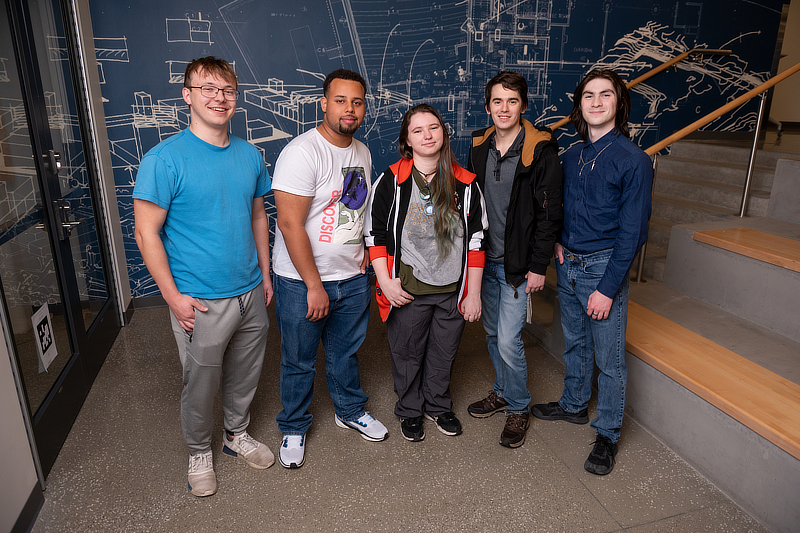
Mateusz Wiszniewski, Justin Vasquez, Maddie Backus, Andrew Haller, and Johnathan George
Dr. Mehdi Mekni
To enhance the dining experience at the University of New Haven through the development of Nutritional Overview Manager — a UI/UX-optimized platform designed to address key shortcomings in the current system, including inaccurate information, limited accessibility, and inefficient menu updates. The platform prioritizes data integrity, secure user interactions, and traceability to provide a user-centric application that empowers students to make informed dining choices while streamlining dining operations.
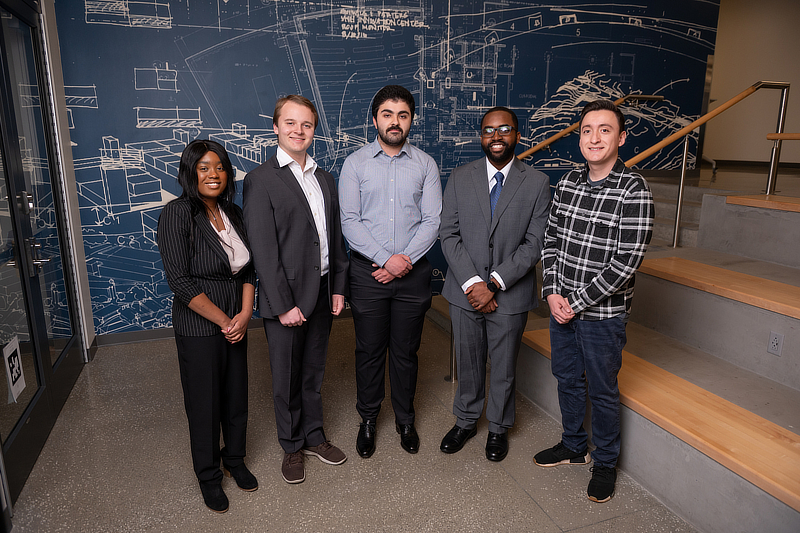
Fredlyne Antoine, Evan Vojta, Ryan Larrea, Hashim Ali, Steve Nwachukwu, and Matthew Rosenblum
Dr. Mehdi Mekni
To transform football film study by integrating artificial intelligence (AI) and virtual reality (VR) to enhance engagement, efficiency, and safety compared to traditional methods. By leveraging AI to analyze game footage, generate actionable insights, and create interactive VR simulations, the project addresses the limitations of passive film review and the injury risks associated with physical mock drills. PRIME-VR (Predictive Real-Time Intelligent Motion Enhancement Virtual Reality) advances sports pedagogy through scalable technology.
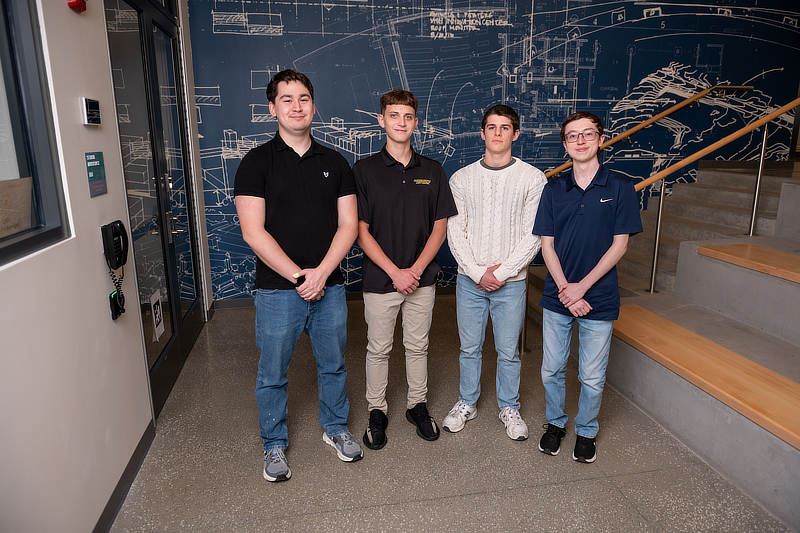
Tyler Burzenski, David Capobianco, Remo DiLorenzo, and James LeBlanc
Dr. Tirthankar Ghosh
To develop an automated vulnerability assessment tool that scans targets for vulnerable applications, interfaces with external threat feeds and databases to retrieve published exploits related to identified vulnerabilities, and populates a backend database with relevant threat information. Additionally, the project aims to create a portal that allows users to search, list, and exploit discovered vulnerabilities.
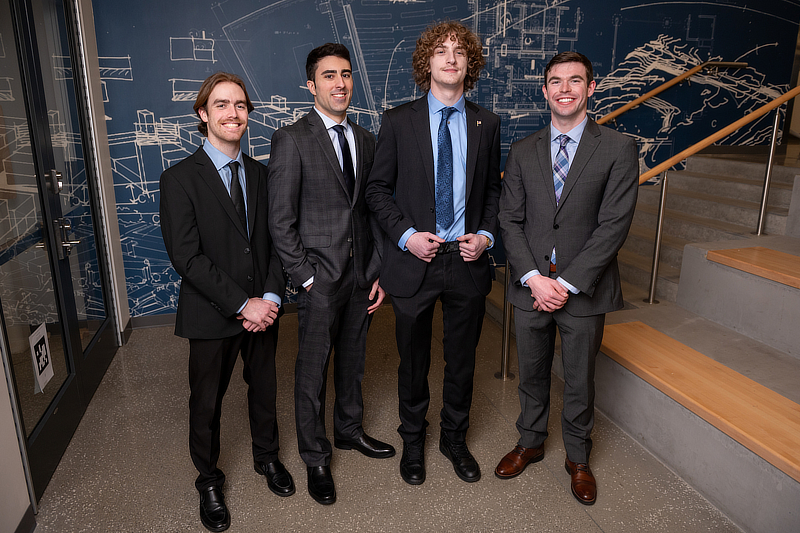
Ryan Stapleton, Ronald Scarpa, Chistopher Protheroe, and Nick Delagrotte
Dr. Tirthankar Ghosh
To develop a code obfuscation tool integrated with artificial intelligence features. The tool will allow users to upload their code, which will then be automatically obfuscated and returned. This solution will benefit programmers and developers by eliminating the need to manually create complex code for obfuscation, saving time and effort while enhancing code security.
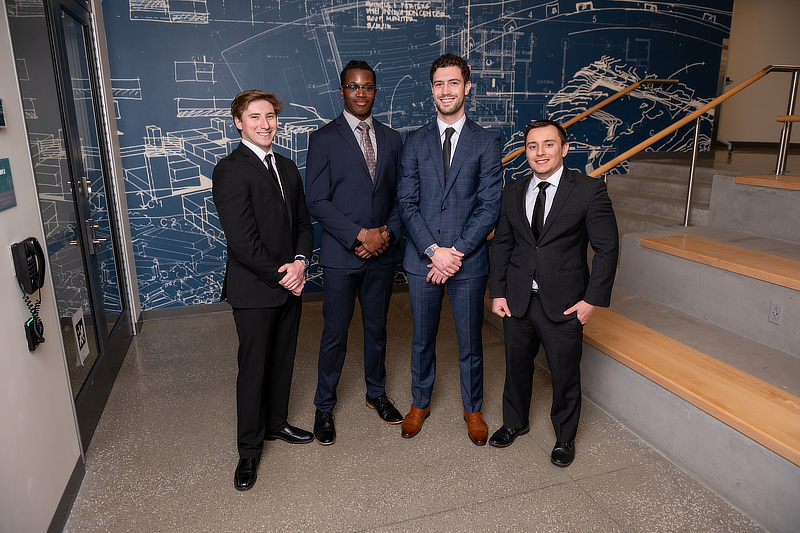
Quinn Kneeland, Cayden Evans, Nolan Pieters, and Anthony Costa Jr.
Dr. Tirthankar Ghosh
To investigate different methods of session hijacking in the context of bypassing multifactor authentication (MFA). The study will compare various MFA techniques and explore how session hijacking can be leveraged to circumvent them. The project will culminate in the development of a prototype solution designed to defend against session hijacking attacks within the MFA framework.
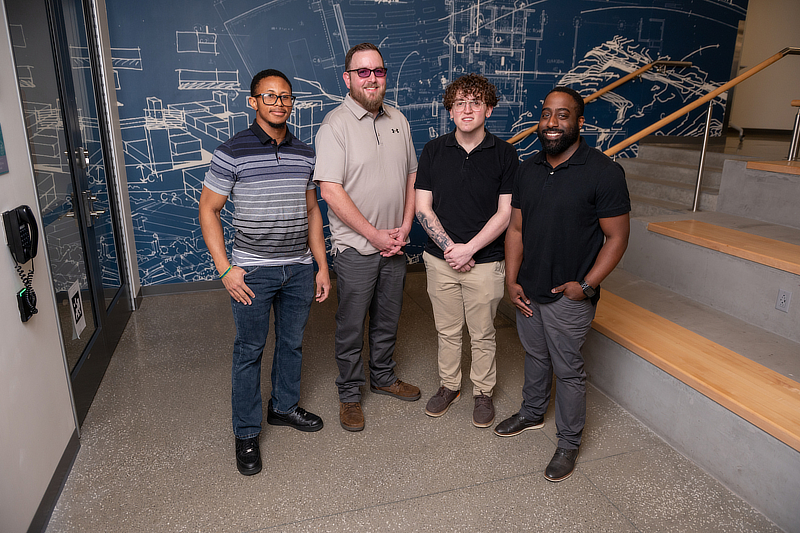
Akinbusola, Akinwunmi, Christopher DiGioia, Pedro Gonzalez, and David Jones
Dr. Tirthankar Ghosh
To develop a prototype Wi-Fi sensing device capable of tracking moving objects within a defined geographical boundary. Additionally, the project will investigate various applications of Wi-Fi sensing, examine potential adversarial impacts, and propose strategies to mitigate the risks associated with the malicious use of Wi-Fi-sensing technology.
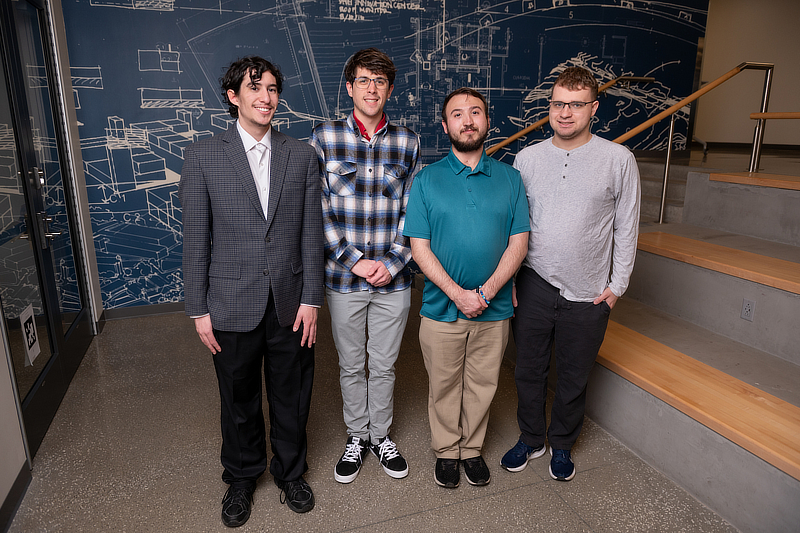
Nicholas DePaola, Dan Garcia, Anthony Yannaella, and Frank Wild
Dr. Tirthankar Ghosh
To study and simulate cyberattacks on an autonomous vehicle platform using MATLAB tool kits. The simulation will involve adjusting various parameters to model vehicle malfunctions and analyze their behavior. Additionally, attack injections will be simulated through the Transmission Control Protocol/Internet Protocol (TCP/IP) backbone, and the resulting vehicle malfunctions will be examined. Data flow diagrams will be created to illustrate communication paths using both CANBUS and TCP/IP as well as cellular backbones.
Ashley Bekondo, Ethan Kortman, Hannah Fitzgerald, and Michael Dedvukaj
Dr. Tirthankar Ghosh
To build a honeynet that replicates the Connecticut Institute of Technology (CIT) network’s production systems. The honeynet will deploy honeypots to emulate CIT’s servers and end stations, while a honeywall will be implemented to capture and log all activities within the network.
Alexandra Iozzo, Benjamin George, and Matthew Gomerez
Dr. Ismail Orabi
Matthew Lang, Senior Automation Engineer, and Marc D’Urbano, Engineering Manager — Mechanical, Edgewell
Edgewell Personal Care, a trailblazing personal care company that leverages its employees’ creativity and passion to challenge convention and drive growth
To enhance and optimize Edgewell’s current blade strip welding and dressing processes. The team will conduct research and design, test, and propose solutions to streamline these processes. The anticipated outcome is a reduction in production time and an increase in overall efficiency for Edgewell.
Justin Ortiz and Michael Coppola
Dr. Ismail Orabi
Derek Favret, Manufacturing Engineering Supervisor, RBC Bearings
RBC Bearings, designer and manufacturer of highly engineered precision bearing components and essential systems for the industrial, aerospace and defense industries
To reduce Heim Bearing’s design time and costs by validating and improving their swaged bearing design model through both physical and analytical testing. The properties of the maintenance-free liner will be evaluated through physical compression testing, and the results will be incorporated into the Ansys FEA model, replacing the current generic linear isotropic properties. Ansys Response Surface Optimization will be utilized to generate new preprocess component geometry and tooling specifications. If time permits and validations are successful, work instructions will be developed for the Heim engineering team to ensure consistent creation of tooling and component preprocessing sizes using the enhanced FEA optimization software.
Semih Akyuz, Angela Mercaldi, and Tyler Pendleton
Dr. Ismail Orabi
William Welsh, Sr., Technical Fellow, Sikorsky, Lockheed Martin
Sikorsky, a Lockheed Martin Company — A global leader in supporting customers’ missions, strengthening security and advancing scientific discovery
To test and enhance the design of a new fast active vibration compensation system. Replace previous variants with a more efficient system that reduces latency, weight, and footprint by utilizing an innovative power delivery method. The system is crucial for improving component longevity and ensuring crew comfort, particularly during high-stress situations and tight maneuvers. Validate the feasibility of an existing proof-of-concept prototype developed at the University of New Haven. Subsequently, further optimize the system’s weight, footprint, durability, and manufacturability.
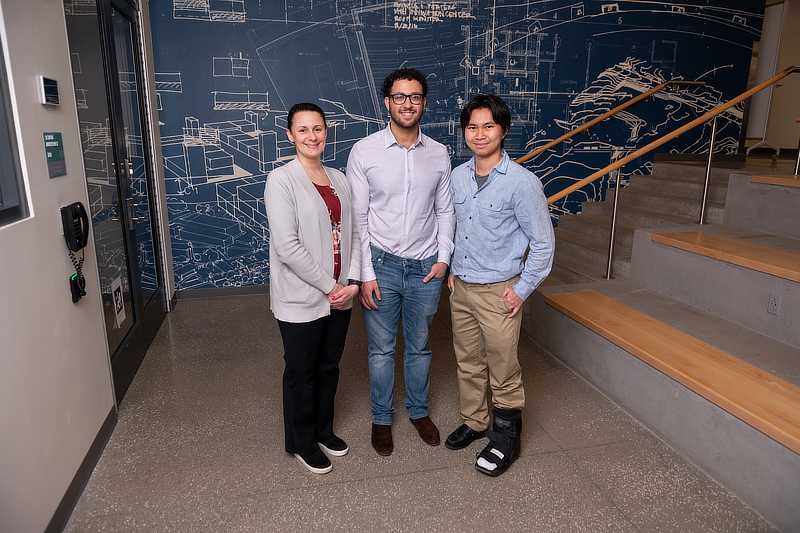
Ashton Brunell, Phelopateer Ibrahim, and Benjamin Norodom
Dr. Joseph A. Levert, PE
Richard Cerniglia, Engineering Supervisor, Fluid Systems, General Dynamics Electric Boat
General Dynamics Electric Boat — 125 years of established standards of excellence in the design, construction, and life cycle support of submarines for the U.S. Navy
To develop a relief valve for a specialized application that significantly minimizes vibration during seating (closing) while extending service life. The project will enhance an existing commercially available valve design by optimizing the seating mechanism to reduce undesirable vibrations and improve the durability of the poppet and seat, achieving a target of 35,000 open/close cycles. This advanced valve design aims to enhance overall ship system performance and reliability while also reducing the maintenance costs associated with the short service life of current valve models.
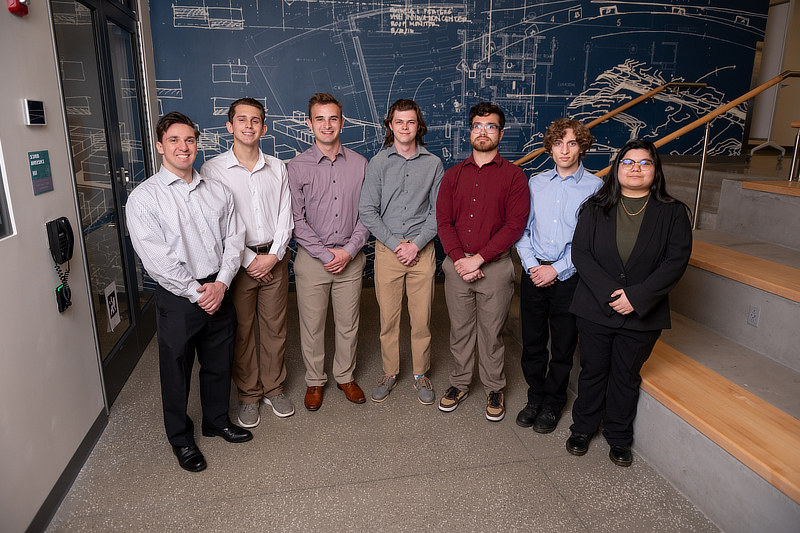
Shaunessy Reynolds, Erik Parker, Aidan Stoner, Erin Mae Cardino, and Marc Santacapita (Electrical and Computer Engineering); Joseph Marcello and Aidan Stehlik (Mechanical Engineering)
Drs. Shayok Mukhopadhyay and Joseph A. Levert, PE
The Mars Society, University Rover Challenge
Individuals: Anil Shah, Robert Alvine, Mike Ambrose, and Bill Welsh
Companies: Protospace MFG, BTX Global Logistics, ODrive, and Rokland
To build a rover to compete in the University Rover Challenge, an annual international competition in which university students design and build Mars rovers to complete tasks across four key missions: equipment servicing, autonomous navigation, science, and extreme delivery. The rover will be equipped with an arm, chassis, drivetrain, power distribution unit, sample collection system, and autonomous navigation system. It will weigh under 50 kg, fit within a 1.2 × 1.2 × 1.2-meter cube, and have a total cost not exceeding $22,000 including all expenses.
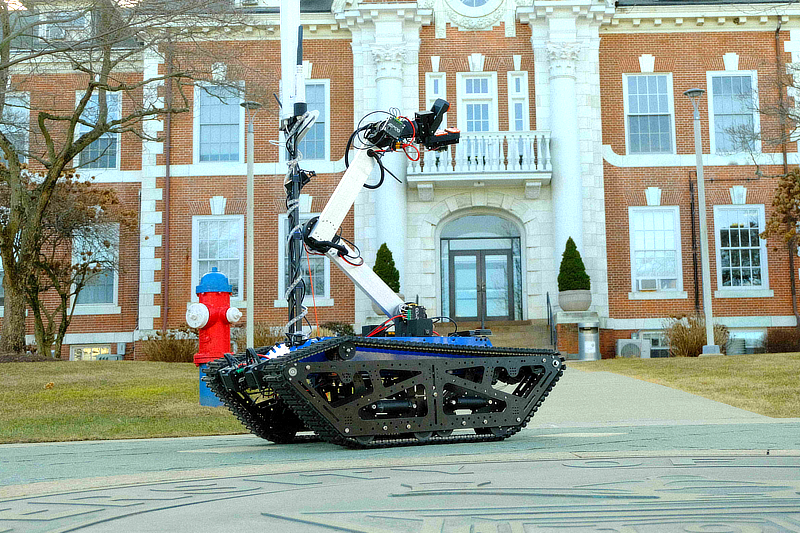
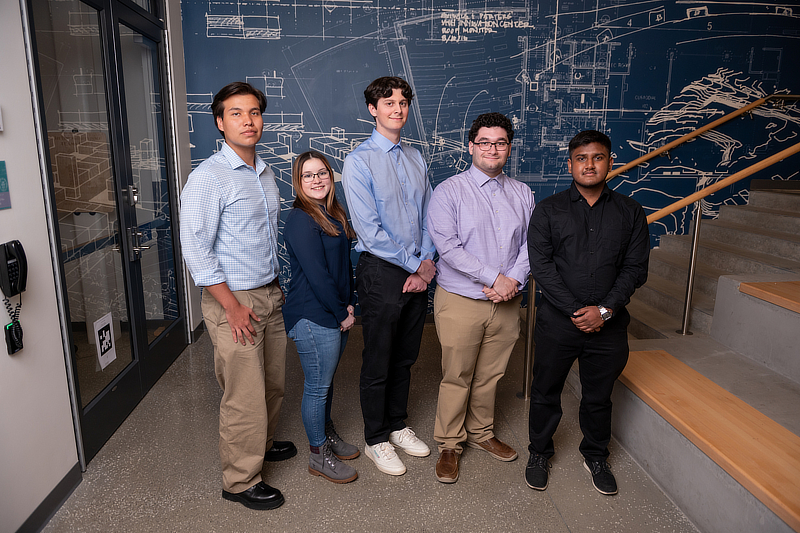
Julia Casella (Engineering), Carlos Chaparro (Mechanical Engineering), Logeswaran Kattikulam Ganesan (Electrical and Computer Engineering), and Gabriel Olszewski and Bryce Titus (Computer Engineering)
Dr. Mohsen Sarraf
Shanthala Nagesh, Honeywell
Honeywell, a global leader in technology and manufacturing, delivering innovative solutions in aerospace, building technologies, fire alarms, performance materials, and safety to enhance efficiency, sustainability, and performance for customers worldwide
To convert an existing Arduino-based standby operating test fixture to a Beckhoff PLC system. The fixture, designed in accordance with UL 864 (10th ed.) and ULC S527 (4th ed.), is used for testing charging current and standby operating power for releasing devices. By adjusting dwell and transfer times, the updated fixture will be capable of complying with multiple fire and security charger test standards. The system will control a fire alarm control panel or power supply unit to operate in Normal Standby, Alarm, and Releasing modes using the Beckhoff PLC. This will involve programming various relays to simulate panel conditions, control loads, send scan signals to a Keysight data acquisition meter, and provide multiple positive feedback signals from the panel.
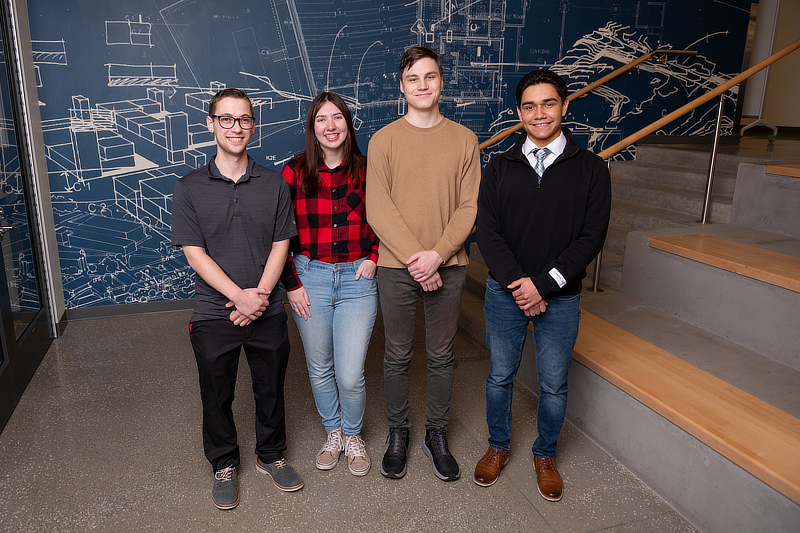
Anthony Mauro and Nikolas Troast (Electrical Engineering); Morgan Fabbricatore and Raymond Pagan (Mechanical Engineering)
Dr. Joseph A. Levert, PE
Will Fergueson, Hitchner Manufacturing Co.
Hitchner Manufacturing Co., a complete-to-print castings manufacturing company specializing in components for the automotive, aerospace, and defense markets
To design and develop a device for externally monitoring the internal temperatures of a ceramic mold preheating oven, where temperatures exceed the limits of commercially available sensors. The automated system will use noncontact sensors to rapidly measure the temperature of removable ceramic mold covers as they exit the furnace onto a chute. Temperature data will be automatically transferred to the site’s digital storage system while an automated notification system will alert operators when the storage cartridge requires emptying. This solution will enhance temperature tracking accuracy, enabling scheduled maintenance to prevent costly, unplanned shutdowns.
We thank our industry sponsors who served as customers for our students as well as supporting their prototyping expenses. As customers, they gave valuable time and insights that uniquely benefited our students with an experiential design education in a real-world setting, which greatly complements the team mentoring by our faculty colleagues. Their generous commitment to our students brought their design education to life.