As a member of the University's Summer Undergraduate Research Fellowship Program, I recently began diving into my project with the assistance of my faculty mentor. While the work in the laboratory has gotten fishy, I have already begun to build my research skills.
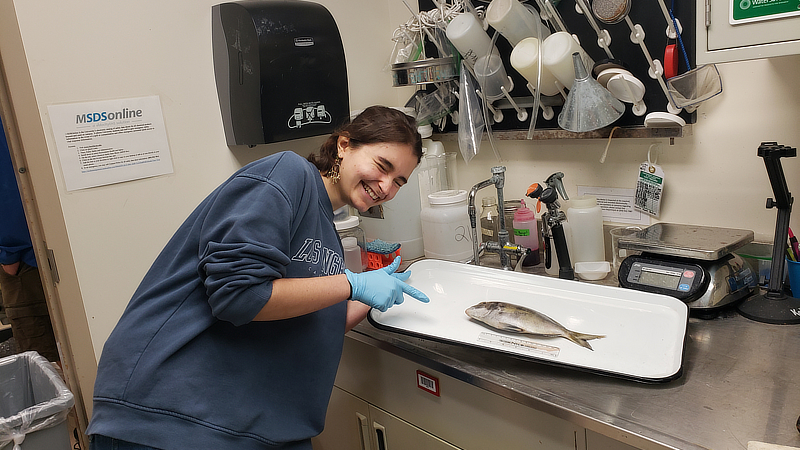
When I originally began my Summer Undergraduate Research Fellowship project, the easiest way to explain the procedure of the experiment was, “Oh, yeah, I'm just a melting bunch of fish.” Perhaps while this wasn't the best way to explain what was going on – the human face is capable of many expressions – it got the job done.
As week two has passed on, not only have I put my lab skills to the test, but I've acquired so many more. Working with Dr. Conroy has introduced me to many species of fish, as well as how to use them to my advantage. For example, in order to determine the age of a fish, one can search for its otoliths, which are calcium carbonate structures that are nestled behind the brain and eyes of the fish.
I will repeat: brain and eyes.
Following the dissection of the brain of a fetal pig in my second semester bio lab, I was sure that dealing with fish brain would be a piece of cake. False. Watching in horror as Dr. Conroy dove into the cranial cavity of our test fish, Mr. John Dory, I discovered two things about the brain of a formally frozen, three-year old dead fish:
- Any brain, regardless of where it was coming from, is nasty
- Captain America fish brains look like melted strawberry sorbet
As Dr. Conroy very enthusiastically explained, the many parts of the fish and what they did with goop brain all over his gloves, all I could think was: don't puke don't puke don't puke don't puke. Obviously, I knew I'd be dissecting fish. As the author of the research project, I thought it would be odd that I didn't know my own procedure. Thankfully, after a few guided practice dissections and finally, my own, it's safe to say that I'm a lot more comfortable with what's going on.
On that note, the team has changed our procedure slightly. As we are trying to avoid any excess microplastic contamination, we've decided to do all dissections under a fume hood. Samples will be collected, weighed, labeled, and transferred into their respectful vials before being escorted back to the main lab room for further processing.
My pace currently rests at one fish per every forty minutes, which isn't terrible for a beginner. Something that complicates things has to do with organ harvesting. While nobody eats the organs of fish (for the most part, at least), they're still a valuable thing to collect in terms of having a sample. The main process of doing so is cutting into the abdomen, tying the stomach and gonads closed with twine to prevent leakage, and placing everything in a jar before labeling it, just like the white muscle. (Is this what the Egyptians felt like?). Overall, dissecting is a rather simple thing once you get it down.
Looking forward, I will be picking up the orders for my project next week! How exciting is that? Granted, I'm not super psyched about possibly smelling like fish, but gosh diddling dang, it's going to be worth it. Soon, I am planning to spend most of the day in the lab learning new things. Dr. Conroy will be teaching me how to filter samples properly, and we will address further data analysis. In summary, things are going as expected, and I couldn't be happier.
With peace, love, and peanut butter,
Beatrice
Beatrice Glaviano '26 is a nutritional sciences major with a pre-med concentration. She is a member of the University's Summer Undergraduate Research Fellowship program.
Contact
Get the highlights!
Stay up to date with our weekly e-newsletter, highlighting stories from around the University and media clips featuring our faculty experts.
Recent News
The Charger Blog
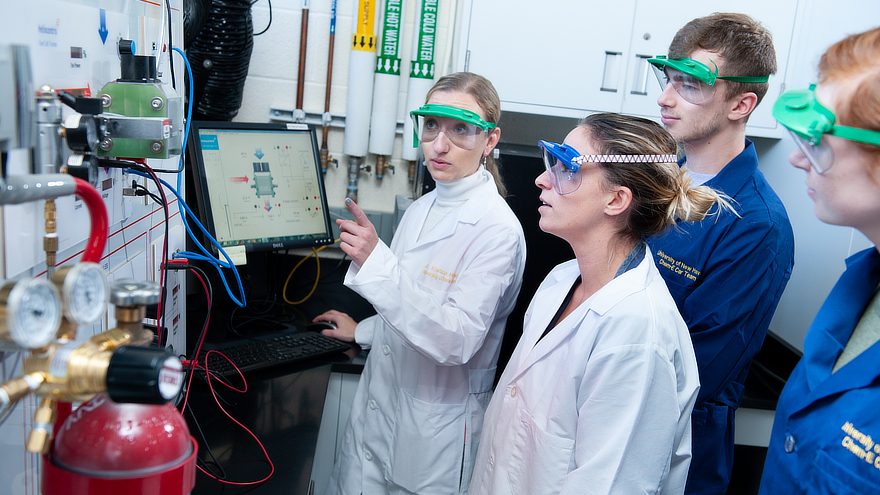
University of New Haven Chemical Engineering Students Earn Research Awards, Scholarships, and Fellowships
The Charger Blog